I have set rods in mud three ways: laid flat in the grass, wedged into a forked stick I cut with a pocketknife, and seated in a ground holder. The first two work until the bank gets soft. Then the stick leans, the rod tips toward the water, and the whole setup starts to feel like a bad idea with a hook on the end. That is why I finally bought the DZrudun ground rod holders the first week of March this year, a 2-pack, after one too many mornings of chasing a rod that had slumped into the mud.
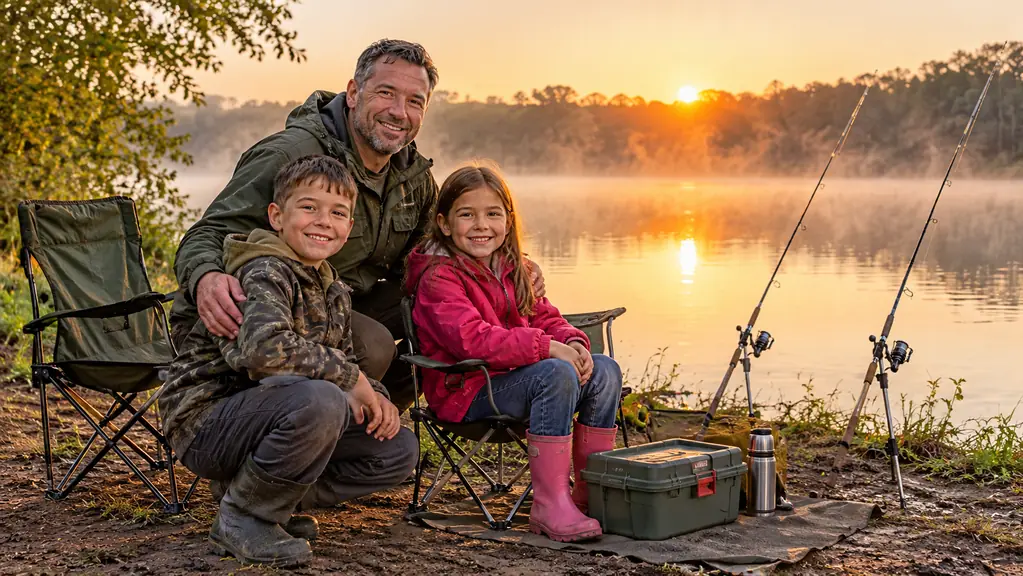
I am not a guide. I am a mom in Brandon, Mississippi, who fishes the bank at Ross Barnett Reservoir and the pond that belongs to my aunt with Wyatt, Callie, and Ben. I first used the DZrudun holders on a Saturday in late March at my aunt's pond. Travis was on shift, so it was me and the three kids. The holders are the piece of gear that made the biggest difference on soft ground because they let me put two catfish rods out and still help Ben with his bobber. This is the setup I use now, step by step, including the parts that still annoy me.
Two rods, soft mud, and no more cut sticks
The DZrudun 2-pack is what I use on the soft banks at my aunt's pond. The 12.95 inch stainless steel tapered drill stake and the 360 degree horizontal and 130 degree vertical adjustment are the two details that matter most when the ground gives under your boot.
Amazon See the DZrudun rod holders on Amazon →Why a Forked Stick Fails in Mud
A forked stick is not stupid. It is free and it is there. But a cut branch has one grain, one angle, and no way to lock the rod where you want it. On dry ground it can hold a light rod for a while. On soft mud the fork sinks on one side, the rod rolls, and the tip ends up pointing at the water. I have had a catfish rod go from upright to flat in the time it took me to open a bag of worms.
A store-bought ground holder is not magic either. It is a stake and a holder. What makes it work is that the stake is long enough to reach past the soft top layer and the holder holds the rod at an angle you choose. The DZrudun holder has a 12.95 inch stainless steel tapered drill stake. That length is the reason I can use it on the mushy edge at my aunt's pond, where a short stake would just lean over.
Step 1: Walk the Bank Before You Unpack
The first mistake is picking the spot where the fish are instead of the spot where you can stand. On a soft bank those are often two different places. I walk the edge first with the kids still at the Tahoe. I look for a patch that is flat enough for a camp chair, firm enough that my boot heel does not sink past the sole, and close enough to the water that I can reach the rod tip without wading. We do not own waders, so that last part is not negotiable.
I also look up. A rod in a holder is a tall thing with a fishing line on it. If the sky is building and I can hear thunder, we do not set rods on open bank. That is a check your state rules and use your head situation, not a gear problem. On a normal morning, I pick a patch with a little grass or roots holding the soil. Bare mud at the waterline is where the stake has the least to grab.
Step 2: Set the Stake at the Water's Edge, Not in It
I set the stake a boot length back from the waterline, on the firmest mud I can find. The holder is a ground mount, so it does not clamp to a pier or a rail. It goes into dirt. If the bank is sloped, I set the stake on the high side of my chair and turn the holder so the rod tip points out over the water, not down the bank. That keeps the line off the mud and keeps the reel out of the splash zone.
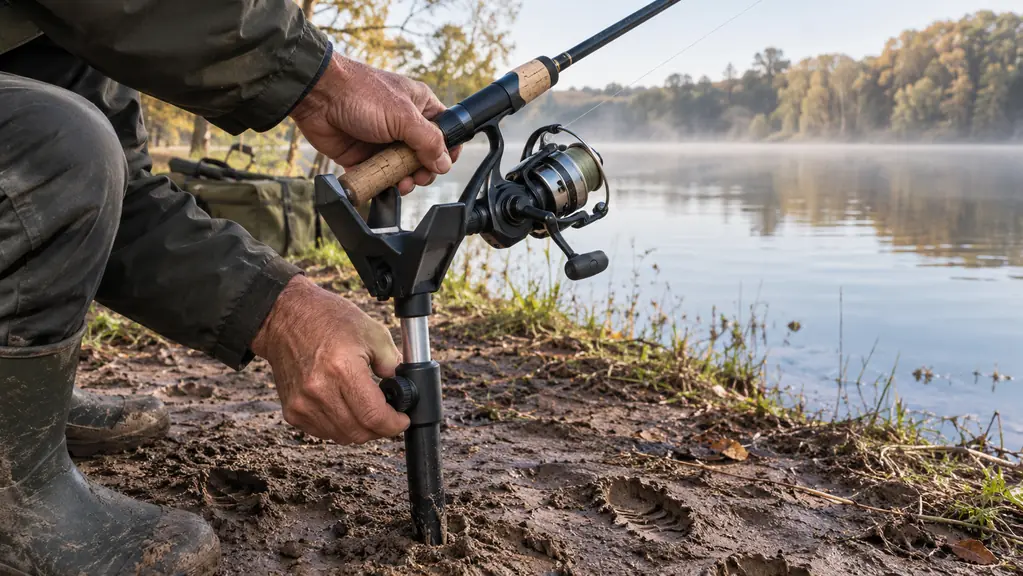
To set it, I push the tip of the stake into the mud and twist. The tapered drill stake starts to bite after the first inch or two. On soft mud it goes down with steady pressure. On hard or rocky ground it is a chore, and I have moved spots rather than force it. I do not hammer it with a rock. That is a good way to bend the stake or crack the holder. If it will not go in with hand pressure and a twist, the ground is wrong for this tool.
Step 3: Set the Angle Before the Rod Goes In
The DZrudun holder has 360 degree horizontal and 130 degree vertical adjustment. That sounds like listing language until you are on a bank that slopes two ways. I loosen the adjustment, point the holder where I want the rod tip, and tighten it back down before I ever pick up a rod. If I set the angle with a rod already in it, I am fighting the weight of the rod and the reel, and I usually end up with the tip too low.
For catfish on the farm pond I want the rod tip up and out, maybe a foot or so above the water, so the line is off the surface weeds. For bluegill with Ben I want the rod flatter and closer to the water so he can watch the bobber. The vertical adjustment is the part I use most. The horizontal adjustment matters when the wind is pushing from the side and I want the rod leaning away from the bank instead of into it.
Step 4: Load the Rod and Set the Drag
I put the rod into the holder butt first, then lay it back until it sits steady. The reel seat sits behind the holder, and the rod should not rock when I let go. If it rocks, the angle is wrong or the stake is not deep enough. I set the drag before the bait goes out. A catfish rod in a holder needs a drag loose enough that a good pull takes line instead of taking the whole setup. That is not a product setting. That is how I keep a rod from going swimming.
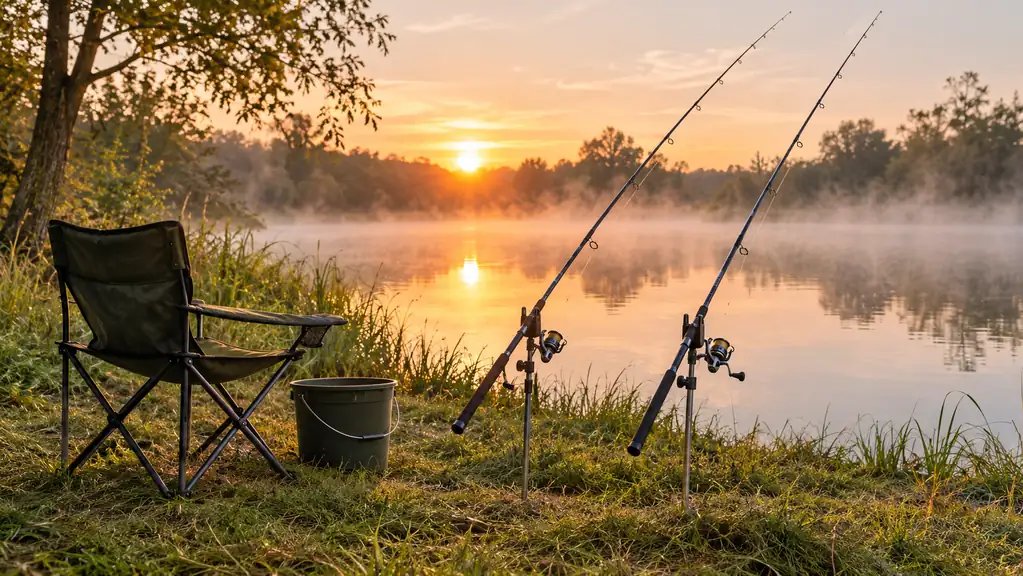
At my aunt's pond I set two rods, one in each DZrudun holder, spaced about eight feet apart. That spacing is not from a manual. It is what keeps Wyatt's casting lane clear and keeps two lines from crossing when a fish runs sideways. I bait one rod and let Callie bait the other if she is with me. Ben runs his bobber rod closer to the chair, and I keep his rod in my hand or on the ground beside me, not in the holder, because he is nine and he still lifts the rod when he gets excited.
Step 5: Pull Test, Then Reset After Every Fish
Before I walk away from a set rod, I give the line a firm pull with the drag where I want it. I am not trying to hook a fish. I am checking that the holder stays put and the rod does not lift out. On soft mud the stake can work loose after a few hours, especially if the bank is getting traffic from three kids. A pull test takes five seconds and saves a lot of grief.
After every fish, I reset the stake. I do not just drop the rod back in. I push the stake down again with my palm, check the angle, and look at the mud around the base. If the hole has widened, I move the holder a foot over and start a new hole. That is the tradeoff of soft ground. The stake goes in easy, and it also comes loose easy. The DZrudun holder is reinforced nylon and it has held up through a spring and summer of this, but no holder can make soft mud into concrete.
What Else Helps
A ground holder is one part of a soft bank setup. The rest is small stuff that keeps a trip from turning into a mess. I bring a small mat or a folded feed sack for the tackle box so it does not sink into the mud. I keep the DZrudun storage pouch in the Tahoe with the holders, and I put both holders back in it at the end of the day so the stakes are not rolling around with the tackle. The 2-pack is what I own. If I had a fourth rod I would look at the 4-pack, but two is right for us.
I also bring a towel for hands and a spare rag for the rods. Mud gets on the reel handle and then on the line. A quick wipe before we pack up keeps grit out of the guides. And I check the weather before we leave Brandon. A soft bank plus wind is worse than a soft bank alone. If the forecast is calling for gusts, I set the rods lower and closer to the chair, or I leave the holders in the Tahoe and fish the pier instead. The holders do not work on the wooden piers at Ross Barnett. They are a ground tool.
Check your state's rules on licenses and limits before you go. That is not a gear issue, but it is part of the trip. I keep ours where I can find them on my phone.
Two rods in the DZrudun holders at my aunt's pond stayed upright through a twenty minute catfish wait and one nine year old running past them. My forked sticks never managed that.
Where This Setup Does Not Work
The DZrudun holders are not a pier tool. The stake needs dirt. On the public piers around Ross Barnett I leave them in the Tahoe and use the rail or a bucket. They are also not a rock tool. I tried one on a rocky patch at the reservoir and gave up after ten minutes. And two holders mean two rods. If you bring four rods, you need two packs or a different plan. The one-year warranty is on the listing, but warranty does not cover a stake that got bent because I tried to force it into ground it did not belong in.
What I Tell Other Parents
If you are setting up for kids, set the holders before they start fishing. It is hard to dig in a stake while a nine year old is asking if he can cast yet. I give Wyatt the job of carrying the tackle box and tying knots, Callie rigs the jigs, and Ben runs a bobber and a worm. That leaves me free to set the two catfish rods and check the drag. The DZrudun holders are not a babysitter. They just keep a rod upright while I do the next thing.
The other thing I tell them is to start with two rods, not four. Two holders, two rods, two jobs. If you cannot keep up with two, four will not help. We fish from the bank and the pier because that is what we have. No boat, no waders. The DZrudun 2-pack fits that kind of fishing. It is small enough to ride in the back of the Tahoe with the tackle and the chairs, and it does the one job I need on a soft bank.
Set the holders before the mud sets the rules
If your bank goes soft every spring like mine does, the DZrudun 2-pack is the simple fix. Two holders, a 12.95 inch stainless steel tapered drill stake, and an angle you can set before the rod goes in.
Amazon See the DZrudun rod holders on Amazon →