
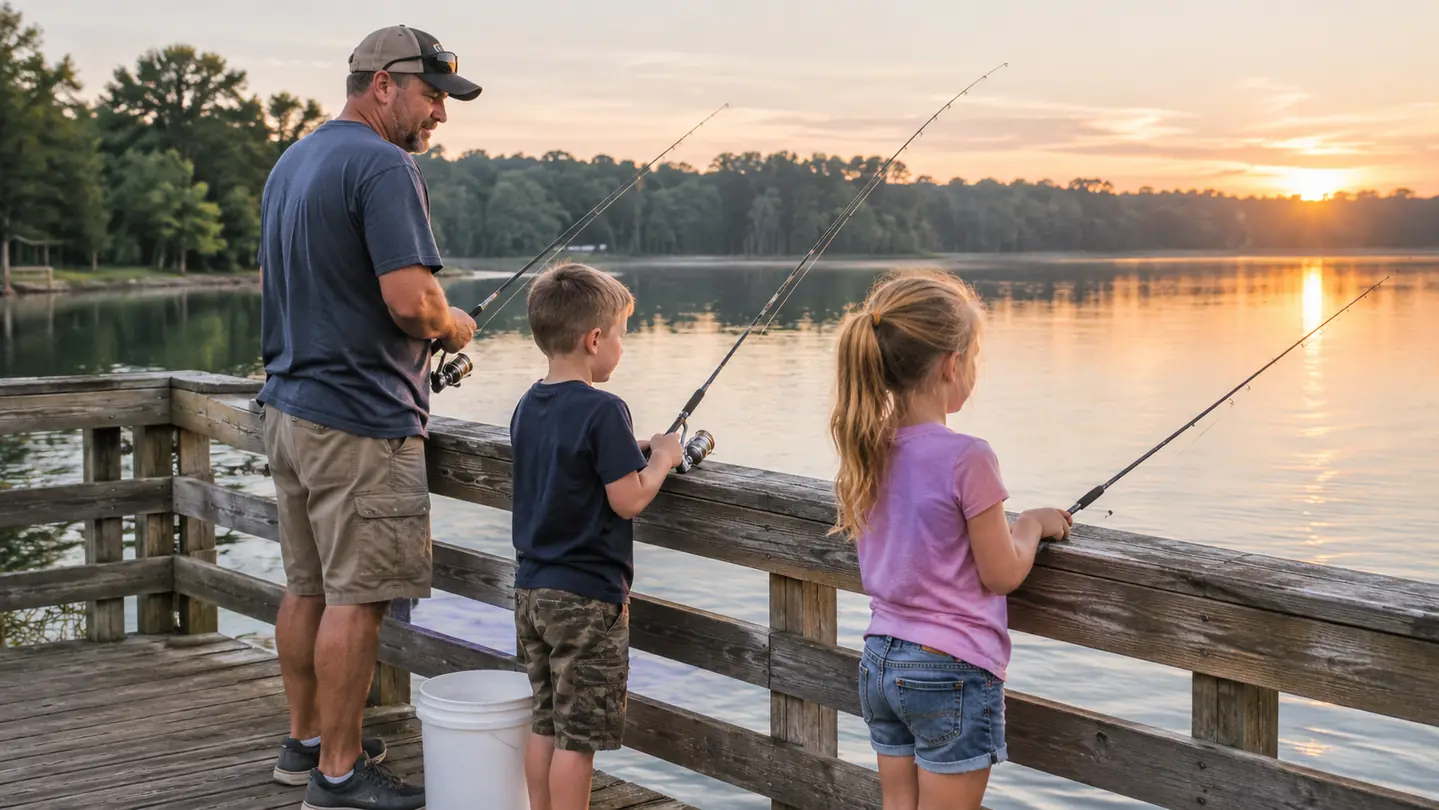
A public pier is a hard place to learn anything. The rail is crowded, the wind pushes your line sideways, and the regulars down at the end are catching supper while your bobber sits there doing nothing. I learned it the long way. Cold Saturday in late February, three kids, three cheap combos from a discount aisle, and a bird's nest on what felt like every cast. Ben cried. We were back in the truck inside an hour. What fixed it for us was not a better rod. It was the small stuff on the end of the line, and the Crappie Magnet Best of the Best Kit is the small stuff we have been fishing ever since.
Here is what a pier gives you that a bank does not: deep water within casting range, shade along the pilings, and lamp light after dark. Crappie use all three. They stack around structure and they suspend at whatever depth suits them that hour, which means the fish are usually there and the real question is whether your bait is at their level. That is a rigging problem more than a casting problem. You do not need to throw far off a pier. You need to put a small jig in front of a fish that is already sitting still.
One Box, 115 Pieces, No Bait Shop Run on Friday Night
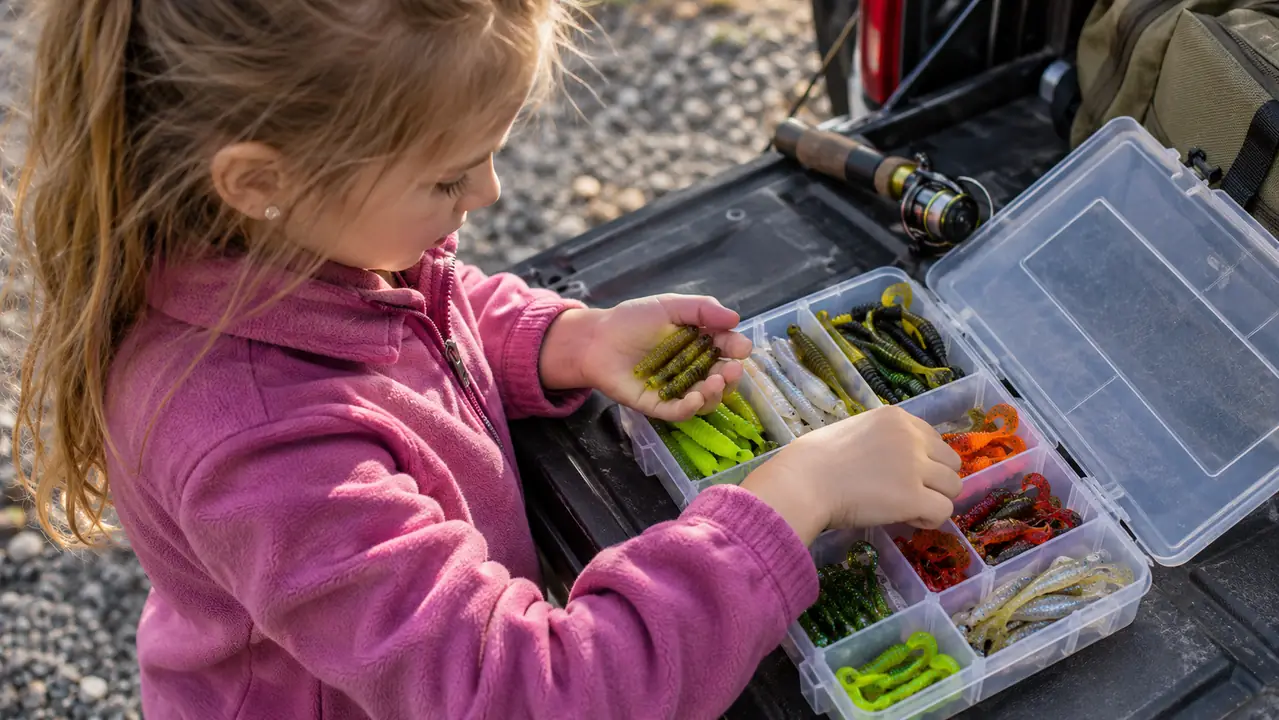
The Crappie Magnet kit carries the split tail bodies, double cross jig heads and E-Z Crappie floats in one tray, so the kids can rig without digging through four zip bags. It has lived in box 2 of our tackle box since March.
Amazon Check Today's Price on Amazon →Step 1: Pick Your Spot Before You Rig a Thing
Walk the pier first. Not with a rod in your hand, just walk it. Look for pilings with shade on them, lamp posts, and the places where the deck changes height and the bottom probably drops off. Those are the spots. The piers I fish have a rail on both sides and a T at the end, and the T is where the crowd gathers because it is easy. It is also where a nine year old with a five foot rod is going to hook somebody's jacket.
Watch where the regulars cast for five minutes. Not to steal a spot, just to read the water. If a man in a lawn chair is catching and you are not, he is probably at the right depth rather than using a better lure. That tells you more than any video. Then set up twenty or thirty feet down the rail from him, far enough that your kids' casts do not cross his line, close enough that you can see what he is doing.
I keep mine off the end of the pier on Saturday mornings. Too many people casting long, too many hooks in the air. Mid-pier along a piling, with a bucket and a folding chair, works fine and it is a whole lot calmer. The fish do not care that you are not at the end.
Step 2: Rig the Jig So the Tail Stays Open
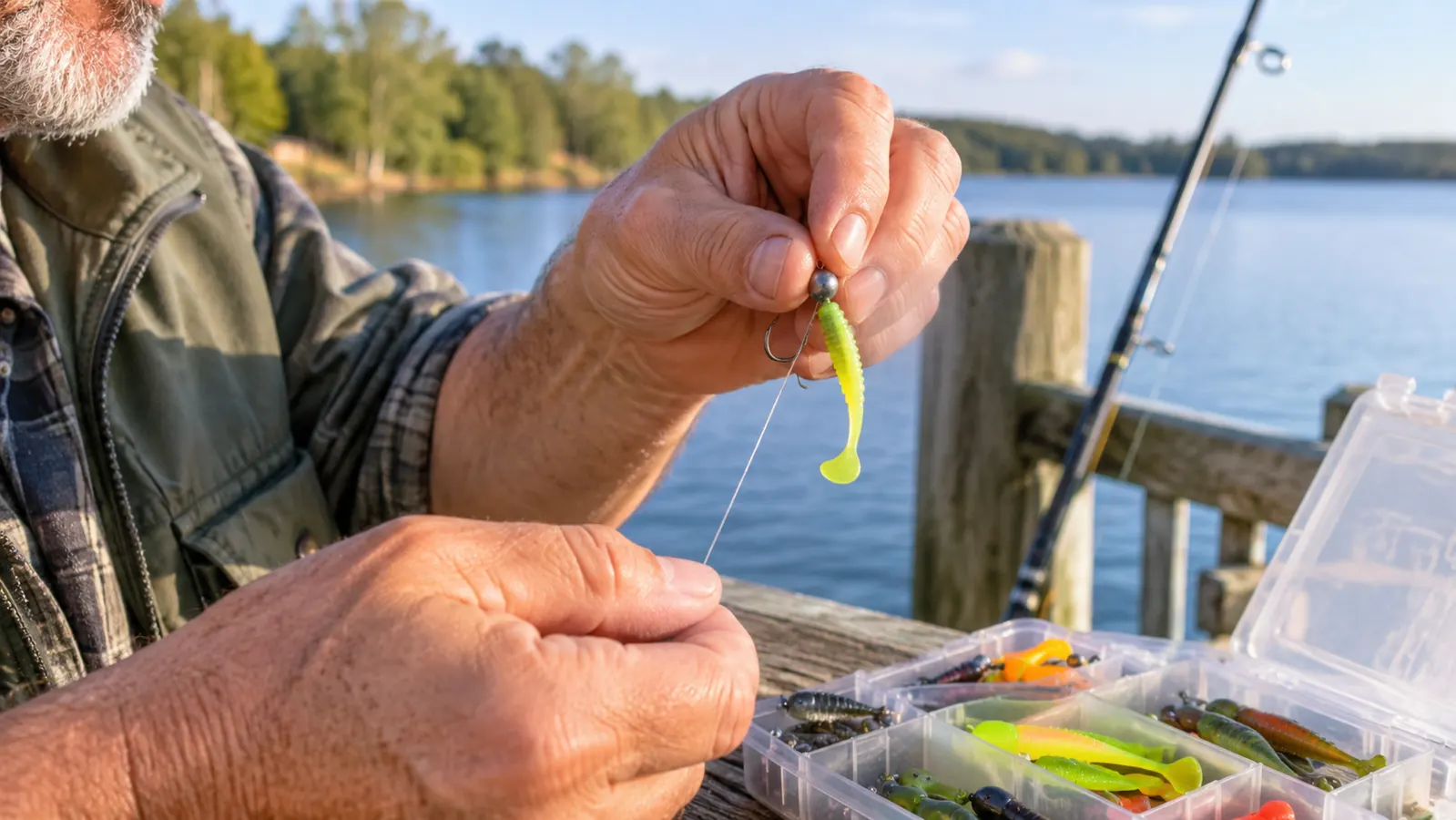
The Crappie Magnet body is built around a split tail, and that split tail is supposed to stay open in the water. The body itself has very little action. That is not a defect, it is the design, and it is the reason it out-fishes the curly tails that wiggle hard and catch nothing. A curly tail pitched off a sunny pier at noon is a lot of movement for a fish that wants a slow, easy meal.
Callie rigs ours. She is eleven and she has small fingers, which helps, because these pieces are tiny. Here is how she does it: push the point of the double cross jig head in at the nose, slide the body up until it seats against the head, then check that the two halves of the tail are sitting apart instead of folded together. If they are folded it will still catch, it just will not catch as well. Straighten it before you cast.
The hooks are J hooks with a spear point, high carbon steel, and they are sharp straight out of the box. That is good for a hookset and rough on a kid's thumb. I keep a small pair of snips in the tray and I do the unhooking on anything that swallowed deep. Also rinse the jig heads in fresh water when you get home. High carbon steel and pier air do not get along.
Step 3: Set Your Depth Before the First Cast
Crappie suspend. They are not always on the bottom and they are not always up top. Some days they hold three feet under the surface over twelve feet of water, and the only way you find out is by fishing a depth and then moving it. That is why I start everybody on a float. The E-Z Crappie floats in the kit hold the jig at a fixed depth, so you can fish the same level twice in a row instead of guessing at it.
Here is the drill I give the kids. Set the float six feet above the jig. Cast, let it settle, count to twenty. Nothing happening? Set the float two feet higher and do it again. Keep stepping down until you find them or until you are bumping bottom, then stay put. Crappie stack, so once you find the level you will usually get more than one fish off it before it goes quiet.
Ben is nine and this is the only part of pier fishing he genuinely likes, because it is counting and moving the float and it feels like a job with a result. He runs a bobber and a worm most evenings, but he will fish a jig under a float all night if it means he gets to be the one who finds the depth.
Step 4: Work It Slow, Straight Down, and Let It Sit
Once the float is off, or once you are fishing straight down beside a piling, the whole game is slow. Lift the rod tip a foot. Stop. Let the jig fall back on a semi-tight line so you can feel it. Stop again. Plenty of people fish a jig like a crankbait, reeling and jerking, and they catch nothing off a pier. The Crappie Magnet is a vertical jig. Vertical means down, not across.
The bite is usually a tap, or the line just goes slack, or the float tilts sideways and sits under. Set the hook up and away, not sideways into the piling. If you miss one, drop right back to the same spot. Crappie return to the same piece of structure, which is the whole reason a pier produces at all.
One weeknight in April we stayed until the light was going and kept about a dozen, which was supper. Callie rigged every one of them. Nobody caught anything worth measuring. It was just a good evening on a pier with a bucket of keepers, and it happened because the jig sat at the right depth and moved slower than I would have fished it left to my own habits.
Step 5: Handle the Crowd, the Kids, and the Keep
Three kids on a public pier is a management problem before it is a fishing problem. My rules: one kid at the rail at a time, rods behind the rail when nobody is holding them, and nobody walks behind a person who is casting. Wyatt is thirteen and he ties the knots and carries the tackle box. That is his job, and it keeps him busy and keeps him clear of the two younger ones.
Check your state's rules before you keep anything. License, size limits, creel limits, and whether the pier you are standing on even allows keeping fish. That is not a detail to sort out with a game warden and three children watching. I keep a photo of the rules on my phone. It takes a minute and it has settled more than one argument at the rail.
For the keep: a five gallon bucket, wet hands, and shade. Fish that sit in a dry bucket on a hot deck do not taste good, and crappie are too good to waste. Keep what you will clean and eat and put the rest back. The pieces from the kit are small enough to disappear, so I keep a shallow tray in the tackle box and the kids drop used jig bodies in it instead of over the side.
About a dozen crappie on a weeknight in April, kept for supper, and every one of them rigged by my eleven year old.
What Else Helps
Line matters more than people give it credit for on a pier. We re-spooled all three reels with Berkley Trilene XL in six pound test, about a hundred yards each, at the kitchen table the night the box came. Six pound is light enough to cast a small jig and heavy enough to land a crappie, though it is not what I would want tied to a big catfish. I trim the worn end before every trip and I have not re-spooled since March. Monofilament does hold some coil when a reel sits, so a few casts to stretch it out is worth the trouble.
The rods are the Ugly Stik five foot spinning kits, three of them, one per kid. They are the right size for Ben and they are getting short for Wyatt, who is thirteen and wants to cast past the pilings. The reels are basic. That is the honest trade at that length. They have held up since March with nothing broken, but five foot is five foot.
The tackle box is a Plano angled system with three 3560 boxes, sorted by job instead of by kid: bluegill, crappie, catfish. The Crappie Magnet kit lives in the crappie box. It is bulky and it gets heavy for Ben once it is loaded, which is why Wyatt carries it. And the ground rod holders stay in the Tahoe on pier days, because a stake is not going into a wooden deck. Those are for the bank and my aunt's pond, not for this.
One more small thing, and it is not gear: a rag, a headlamp, and a pair of forceps. Those three keep an evening from ending early, and none of them cost anything to throw in the back of the truck.
Start With the Box, Not the Rod
If your pier nights are ending in tangles and an empty bucket, the rod is probably not the problem. The Crappie Magnet Best of the Best Kit is 115 pieces of the small stuff that actually gets bit, and it fits in one tray of a tackle box.
Amazon Check Today's Price on Amazon →