
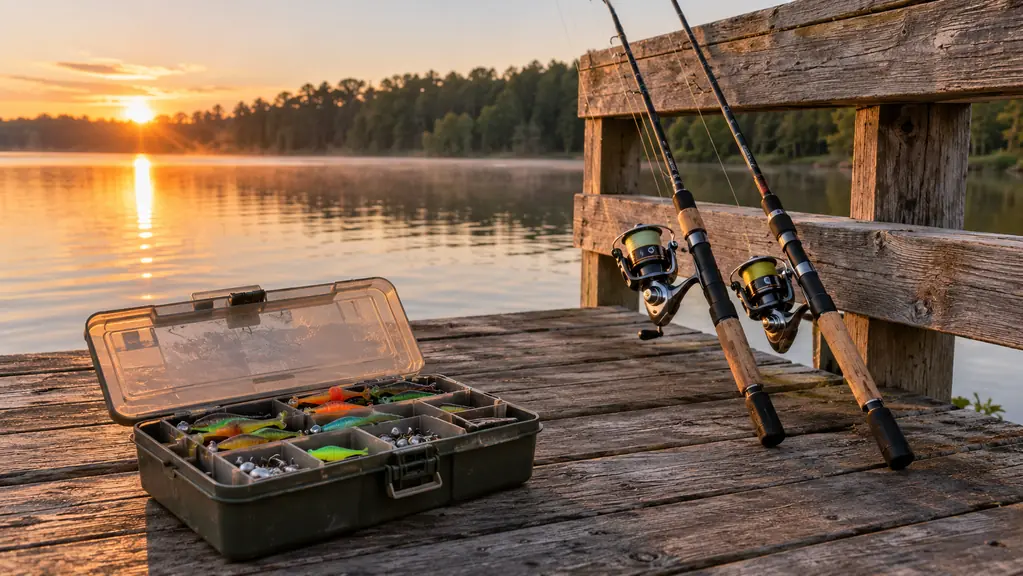
The box came the first week of March. I stood at the kitchen counter pulling little split-tail bodies out one at a time while Travis asked why anybody needed a hundred and fifteen pieces of anything. Fair question. I did not have a good answer at the time, only a feeling that I was tired of the rigging scramble on the pier. I bought the Crappie Magnet Best of the Best Kit with my own money, eight months ago now, and I have hauled it to the public piers around Ross Barnett and out to my aunt's farm pond ever since.
Before that kit, our crappie tackle was whatever happened to be left on the bait shop peg. A few jig heads in a zip bag, a bag of plastics that never matched them, and an awful lot of me digging through the bottom of the Tahoe while Ben was already asking if he could cast. We caught fish that way. We also lost a good share of every afternoon to sorting. This kit fixed the sorting. It did not turn us into people who bring home a limit every trip, and I want to say that plainly before I say anything else.
The Quick Verdict
One small box answered the what-do-we-rig question for a family fishing from shore. The pieces are tiny enough that a nine year old needs help, and there are a couple of things in there we have never touched.
Amazon Check Today's Price →One box for the what-do-we-rig question
Bodies, jig heads and floats in the same place, so a kid can be rigged and fishing before the bobber stops moving.
Amazon Check Today's Price on Amazon →How I've Used It
The kit lives in box two of our Plano Angled Tackle System. Box one is bluegill, box three is catfish, and box two is the Crappie Magnet kit, which tells you how much of our spring and fall fishing runs through it. Callie, who is eleven, is the one who rigs out of it. She has small fingers and she is patient, and she likes matching a body to a jig head and lining them up in a row before she picks one. I let her do it. It keeps her occupied while I am tying on for Ben, and it means we leave the tailgate with three rigged rods instead of one.
We fish it from the pier most often, on weeknights once school is out, and from the bank at my aunt's pond on the Saturdays we drive out there. The split-tail bodies suit the way we fish, because we are almost always dropping straight down off a rail or making a short cast to structure, not throwing long. It is not a rig for covering water. It is a rig for putting something small in front of a fish that is sitting somewhere and waiting for it.
One Saturday in late April we took it to my aunt's pond instead of the pier, and that was a different job entirely. There is no rail to drop beside out there, just a soft bank and a lot of shallow water along the weed edges. Callie and I worked the same stretch over and over, letting the jig fall and lifting it slow, and it held the kids' attention for two hours, which is the real measure of whether a piece of tackle works for a family. Wyatt took his rod down the bank and fished alone, which at thirteen is what he wants to do anyway.
Our best night with it was one weeknight in April at the pier. The four of us brought home about a dozen crappie and ate them for supper. That is the whole scoreboard, and it was a good night for us. I am not going to tell you it will do that every time, because it has not. There have been evenings where we came home with two fish and a sunburn and a kid who lost a jig head in the rocks.
What's Actually in the 115 Pieces
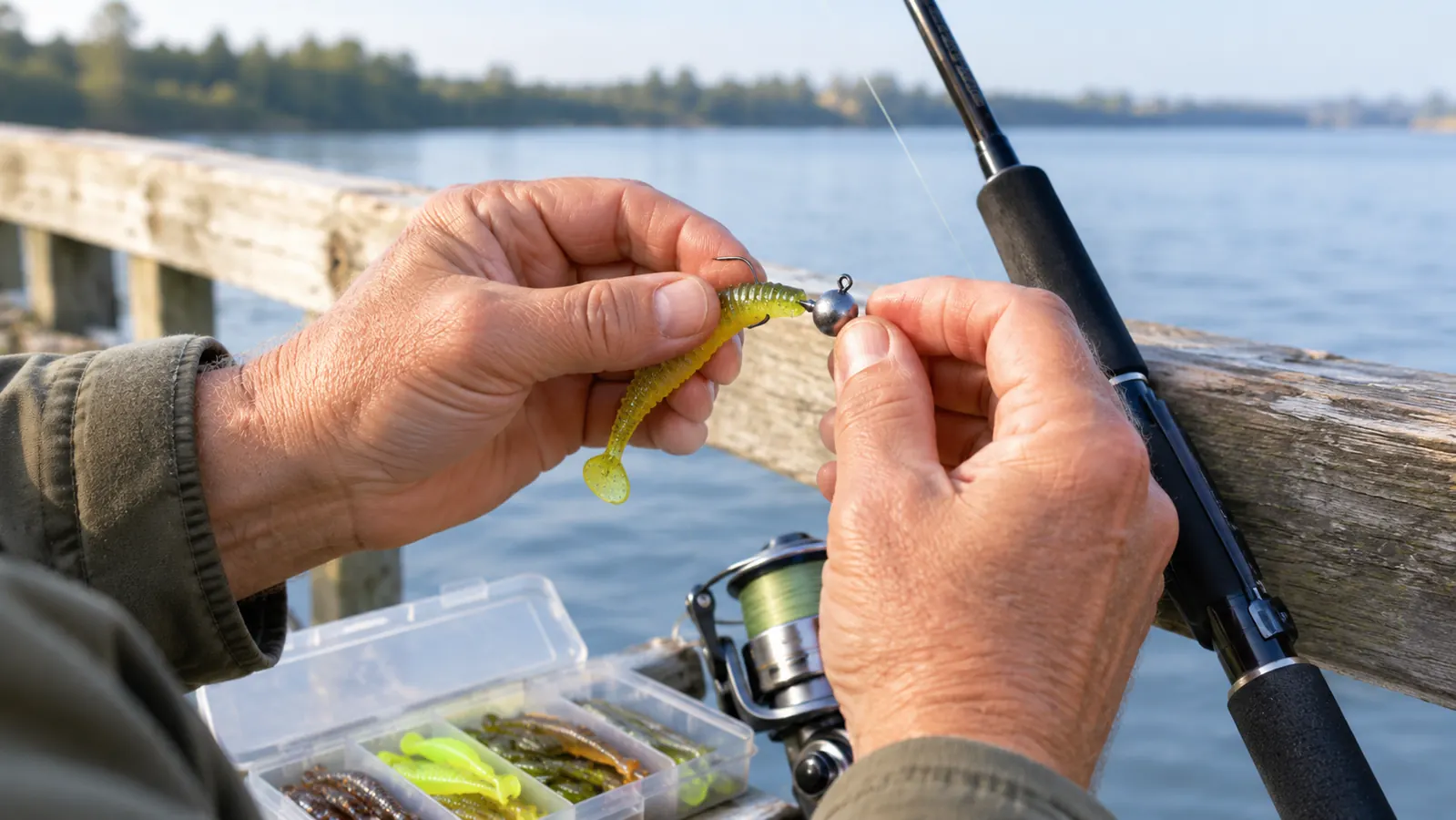
The kit is built around three things. There are the split-tail bodies, the soft plastic part, which is the reason the kit exists. There are the Double Cross jig heads, which are the weighted heads the hook is molded into. And there are E-Z Crappie Floats, so you can set a kid up under a bobber without hunting through the garage for a float that still has its stem.
The hooks are high carbon steel with a spear point, and they are J hooks, which is what you want for panfish. They came sharp and they have stayed that way, mostly because we have not fished them hard enough to wear one out. The jig heads are the part I handle rather than the kids. I am not squeamish, but I have watched a hook go into a thumb, and I would rather it be mine.
One hundred and fifteen pieces sounds like a mountain until you open the box. It is not. It is a small, workable supply of bodies, enough heads to rig three rods at once, and floats. The count is high because the bodies are small and you will lose some of them, and that is the honest read on the number.
Here is how the count actually spends itself. A pier evening costs us three to six bodies between the four of us, more when Ben is fishing bare and finding the rocks. Three rods rigged at the start runs three jig heads. Eight months and somewhere near thirty outings later, the arithmetic is unremarkable: the bodies go first, the heads second, and the floats, which almost never leave the box, will outlast both. Nobody is being cheated by the number. It is just a supply, and supplies run down.
The Split Tail, and What It Does at the Pier
The listing makes a claim worth repeating plainly. The split tail is designed to stay open, the body itself does very little, and the company says it will outfish skirts and curly tails that carry more wiggle. I read that before I bought it and I was skeptical, because my whole life I have been told that more movement is better. What I can tell you is that it works for us, in the specific situation we fish, which is a slow presentation under a float or jigged straight down beside a pier post.
My read on why, and this is a mom who fishes and not a biologist, is that the tail keeps doing something without me doing anything. I can hold the rod still and the tail is still moving. When Ben is holding the rod, that matters a great deal, because Ben's idea of jigging is to set the rod against the rail and go look at a turtle. The bait is still working while he is gone.
There was one evening in early May that convinced me more than anything I could argue. The water was flat, the fish were not showing on top, and I had a curly tail on my own rod because I am stubborn. Callie, fishing her split tail under a float two feet down and two feet away, got bit twice before I ever felt a tap. I switched. I am not going to claim that proves anything about your water. It proved something about mine, on that one evening, and I have fished it that way on still evenings since.
Where it does not shine is on days when the fish want speed. When the fish are up and chasing, a curly tail or a small spinner gets bit and this body sits there. We have those days too. It is a tool for a mood, not a tool for every mood.
Eight Months With Three Kids
Here is what eight months of handling by a thirteen year old, an eleven year old and a nine year old has done to it. Nothing has broken. The bodies get torn up, because soft plastic gets torn up, and that is normal and expected and not a complaint. The box has held its shape. The jig heads have not rusted, which I credit more to them going back in dry than to anything special about the metal.
The floats are the piece I underestimated when I bought it. Ben is nine and he fishes a bobber and a worm and he is not ready to fish a bare jig. Having floats in the same box means he can fish his way while the girls fish theirs, and nobody has to be told they are doing it wrong. That has kept more trips peaceful than any technique I have tried.
Our end-of-trip routine is the same every time now. The kids drop their rigs in the lid of box two, I pull the bodies off the heads and drop them back in, and the box rides home on the floor of the Tahoe instead of loose in the back. That is the entire maintenance routine and it takes about four minutes. The one time we skipped it, after a wet Saturday in June, I found two heads in a cupholder a week later, still fine, which surprised me more than it should have.
What has not held up is my supply. We are down bodies, and I expected to be. The kit is not a lifetime supply and it was never sold as one. If your kids fish it as often as mine do, plan on restocking bodies before next spring rather than being surprised by it.
How We Rig It for a Kid
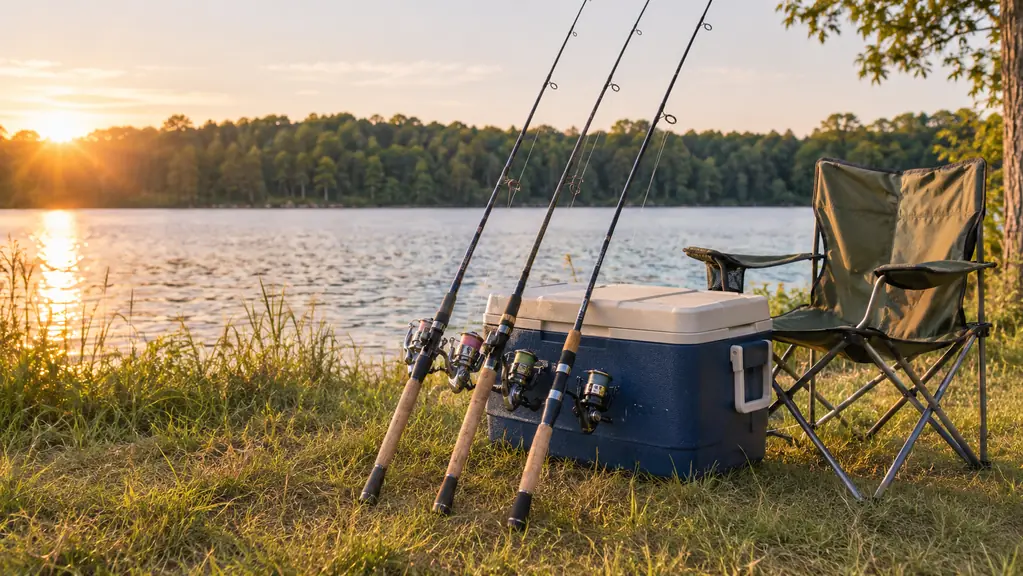
Callie's method, which I have adopted, is to pick the body first and then find a head that matches it, instead of the other way around. She lays three or four out on the pier plank and picks one, and if she loses it she goes back to the row instead of back to the box. It sounds like nothing. It has cut the time between a lost bait and a bait back in the water from several minutes down to about twenty seconds, and on an evening bite those minutes are the whole trip.
For Ben we rig under one of the E-Z floats with a body and nothing else. No split shot, no worm, no two-bait arrangement. Nine year olds are not gentle with a rig and a simple one survives being dropped more often. When he is fishing, I want him watching a float and learning what a bite feels like, not watching me untie a knot.
For myself I fish it bare, straight down, off the downcurrent side of the pier, with the rod in one hand and a thumb on the line. If I get a tap I wait. That is the whole technique and it is the one my grandfather taught me on a farm pond thirty years before this kit existed. The kit did not teach me to fish. It just stopped me from wasting the first twenty minutes of every trip on the search for a matching head.
What It Doesn't Fix
This kit will not make a kid a good caster, and it will not keep small pieces out of the grass. The bodies are small. Callie manages hers fine. Ben loses his, and he loses them the way nine year olds lose things, which is instantly and with no awareness that it happened. If you have a kid under about eight, you will be the one rigging, all evening, and you should know that going in.
It is also not a catfish kit, and I want to be clear because I have made this mistake. Box three is our catfish box for a reason. I brought the Crappie Magnet kit on a catfish trip once because it was already in the back of the Tahoe, and I spent the whole evening looking at it. If the plan is catfish, bring the catfish box and leave this one home.
And it will not fix a bad evening. There are nights when the fish are simply not there and no box of tackle changes that. We had one in July where the four of us fished three hours off the pier and went home with one bluegill and a lot of mosquito bites. I do not hold that against the kit. I hold it against the water, which is a thing you learn to do when you fish from the bank as much as we do.
What I Liked
- Everything for a panfish trip in one small box, with bodies, jig heads and floats together
- The split tail keeps working when the rod is still, which suits kids and suits pier fishing
- High carbon steel J hooks with a spear point that came sharp and stayed sharp
- Enough jig heads to rig three rods at once without stopping to dig
Where It Falls Short
- The pieces are small, and a nine year old will lose some of them
- The bodies run out well before anything else in the box does
- It is dead weight to bring on a catfish trip
- Nothing in the box helps on the days when the fish want speed
One weeknight in April we brought home about a dozen crappie from the pier and ate them for supper. That is the whole scoreboard, and it was enough.
Who This Is For
This is for the parent who fishes the bank or a public pier with kids and is tired of the rigging scramble. If your current tackle situation is a few loose jig heads and a bag of plastics that do not match, this kit replaces that pile with one box and a system that a kid can learn. It is also for the adult who fishes panfish alone and wants a small box that lives in the truck and covers a weeknight, which is honestly how I would use it if the kids ever lost interest in coming along.
Who Should Skip It
Skip it if catfish or bass are your main thing, because everything in the box is built for panfish and you will not get your use out of it. Skip it if you fish from a boat and cover water, because this is a slow presentation and you will reach for something faster by the second stop. And skip it if you have a kid under eight who insists on doing their own rigging, because the parts are small and you will end up doing it anyway. Check your state's rules on limits before you keep anything, and check them again any time you fish a new water.
Eight months in, still the first box I open
Three kids, one Plano box, nothing broken, and a whole lot fewer evenings lost to hunting for a jig head that fits.
Amazon Check Today's Price on Amazon →