
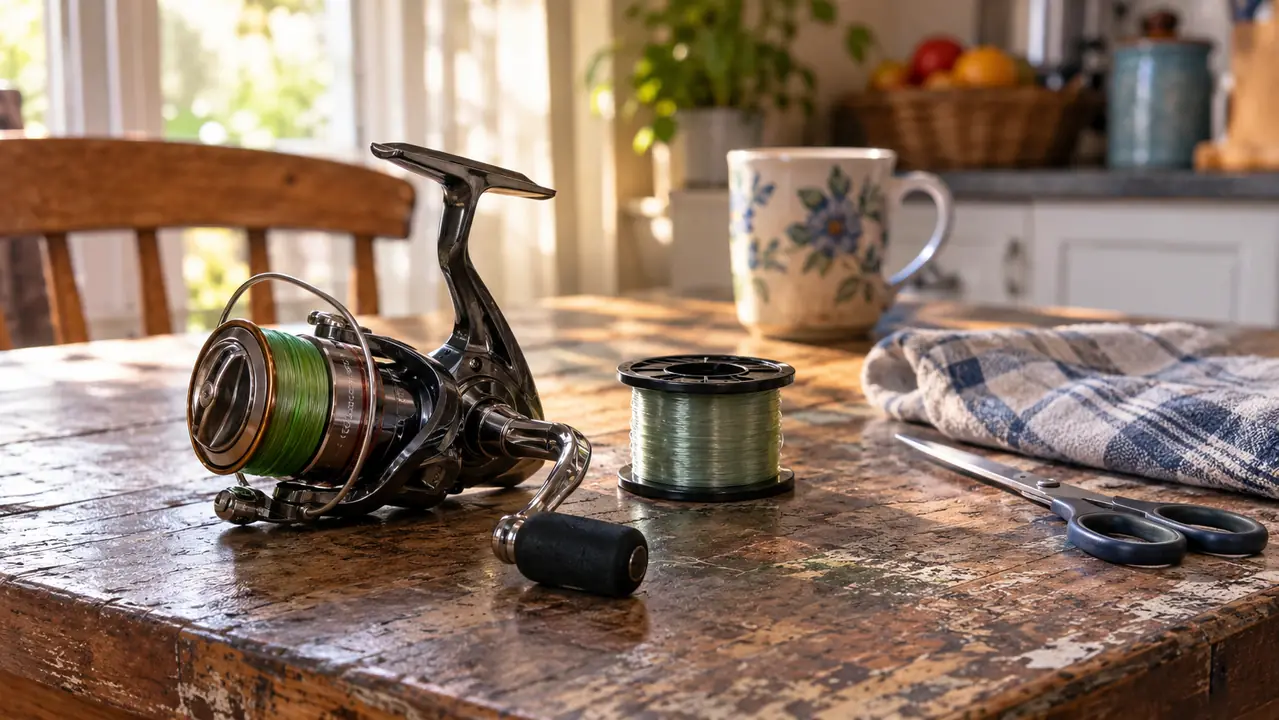
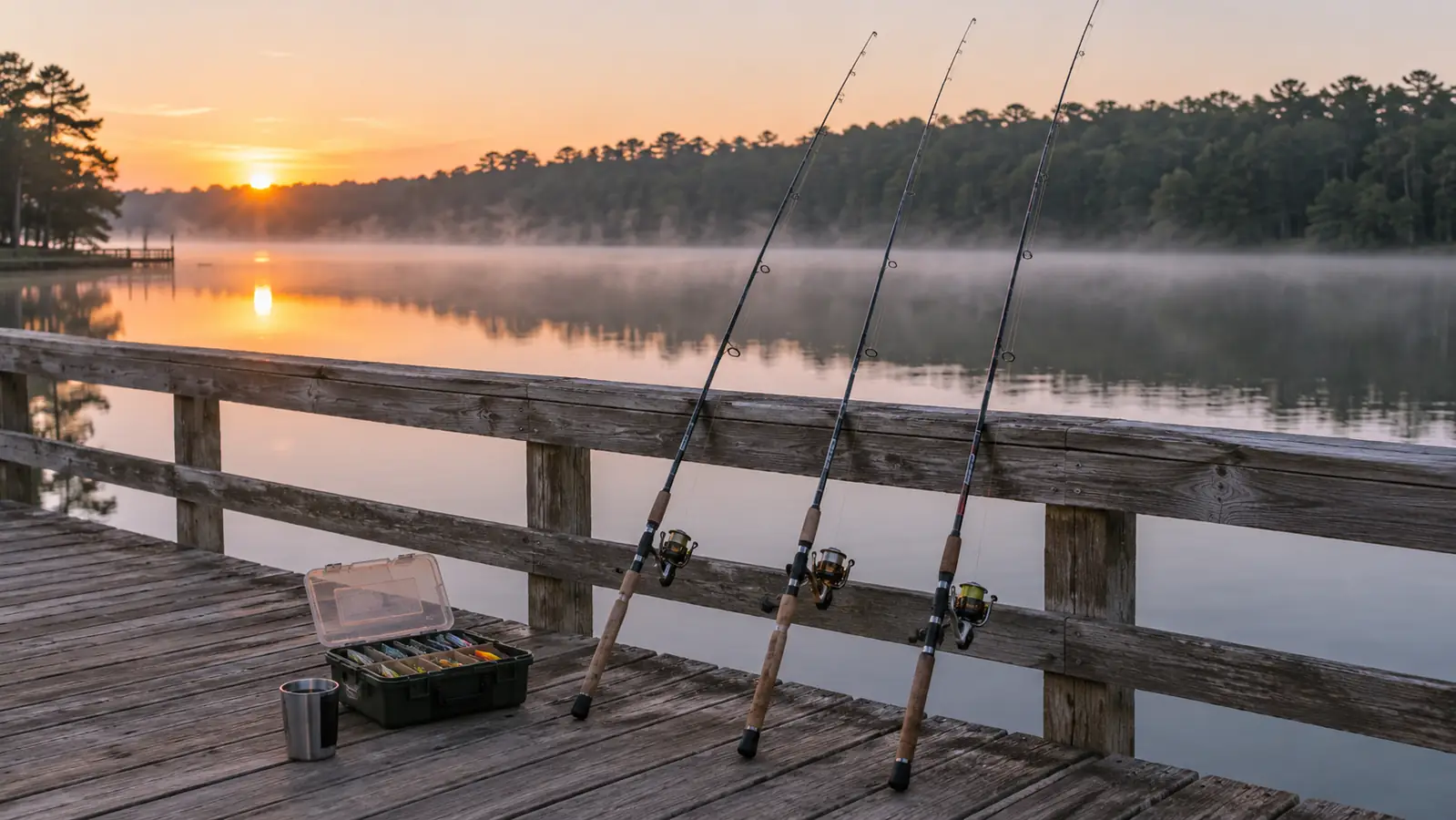
The line is the part of the outfit nobody thinks about until it quits on you. I found that out on a cold Saturday in late February, standing on the public pier at Ross Barnett with three kids and three cheap combos, when the line on every one of those reels started peeling off in bird's nests. Ben, who is nine, got his tangled so badly he cried, and the other two were not far behind. We were back in the Tahoe inside an hour with three rods that had barely been fished.
That afternoon I ordered one spool of Berkley Trilene XL in 6 pound test, 330 yards, and the night the box came I sat at the kitchen table and re-spooled all three reels myself. One spool filled three small reels at roughly 100 yards apiece. Eight months later I have not had to re-spool any of them, and the only thing I have done since is trim the worn end before a trip. What follows is the order I do it in now, because the order is what stops the tangles, not the price of anything.
One spool, three kid reels, and no more nests on the first cast
Berkley Trilene XL in 6 pound test comes on a 330 yard spool. That is about 100 yards for each of my three kids' reels, with line left over for trimming. It is the same line that has been on those reels since March.
Amazon Check today's price on Amazon →Step 1: Match the Line to the Reel and the Fish, Not the Label
Six pound test is not a guess I made at the counter. The kids' kits are small spinning combos with small spools, and a 6 pound line at a 0.009 inch diameter, which is 0.22 mm, is heavy enough to turn a crappie and light enough that a nine year old can load the rod and cast a bobber rig without the reel dumping line he cannot control. Go heavier on a small spool and you get more memory, more coil, and more of those little loops that stand up off the line and grab the guides.
Check the rating stamped on the reel foot or printed on the box the combo came in, and stay at or under it. Mine take 6 to 8 pound comfortably. Go over that number and the line starts doing the job the drag is supposed to do, and something has to give when a fish runs, usually at the knot.
Here is the tradeoff I will tell you straight. Six pound Berkley is light for a big catfish. On an evening when I am soaking a bait on the bottom at my aunt's pond and hoping for a channel cat, I would rather have 10 or 12 pound on the reel. But bluegill, crappie and the small cats that hang around the pier are what my kids actually catch, and 6 pound matches that. Berkley builds this line from 2 pound up to 30, so the same setup thinking works at whatever number fits your reel.
Step 2: Strip Every Inch of the Old Line and Tie a Clean Arbor Knot
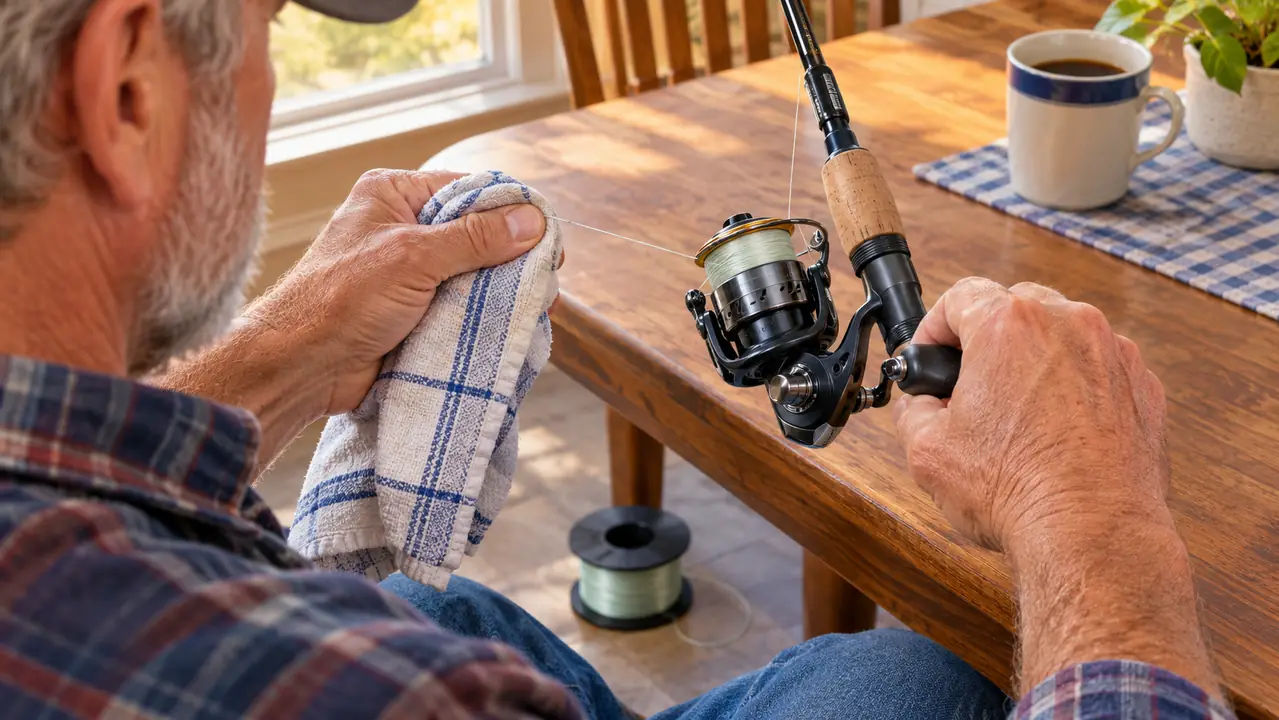
Take all the old line off. Not most of it. All of it. Old monofilament carries the memory of every cast it has made and every hour it spent coiled on a hot spool, and if you wind new line on top of that the new line inherits the set within a week. I peel the old line into a grocery sack, tie the sack shut, and put it in the trash can by the ramp. Line left on the bank gets wrapped around birds, and I have cut enough of it off a wing to know better.
Tie the new line to the bare spool with an arbor knot. Run the tag around the spool, tie an overhand knot around the standing line, then tie a second overhand in the tag past the first one so the knot jams against itself. Wet it and pull it down snug against the spool. It does not need to be pretty. It needs to hold when a fish takes drag and the spool spins. Wyatt, who is thirteen, ties his own now, and I check his work instead of doing it for him.
If your reel is deep, add backing first so the line sits closer to the lip, and read what the reel claims it holds before you start winding. Mine are shallow enough that I go straight to the Berkley. One 330 yard spool, three reels, roughly 100 yards each, and I still had line left in the box for trimming and for the afternoon somebody gets cut off on a pier bolt.
Step 3: Point the Spool the Right Way Before You Crank
Set the filler spool on the floor or on the table, or run a pencil through the hole in the spool and have somebody hold it steady. Then crank ten slow turns with nothing else going on and look at what landed on your reel. Ten turns is all it takes to see the truth about which way that spool wants to feed.
If it looks twisted, or you can already see loops stacking up, take the spool off, turn it over, and crank ten more. One orientation feeds the line flat and the other puts a half twist in it on every turn, and which one is which depends on the reel, not on the line. There is no way to know except to look at it with your own eyes and let the line tell you.
This is the step I skipped in February on the old combos. I wound the line on however the spool happened to be sitting and every third cast it jumped off in a coil that took five minutes and a pair of scissors to clear. Callie, who is eleven, holds the pencil for me now. She thinks it is a real job, and it is. Give a kid the pencil and they will stand there for twenty minutes feeling useful, which is longer than they will stand there watching you work.
Step 4: Fill It Under Tension and Watch the Line Lay
Pinch the line between your thumb and forefinger about a foot above the reel while you crank, so it goes on tight and even. Not tight enough to stretch it. Tight enough that it will not shift on the spool when a fish loads the rod. I fold a dish towel over the line and pinch through the cloth, because bare fingers making that pass two hundred times will leave a groove in you by the second reel.
Stop when the line sits about an eighth of an inch below the lip of the spool. That gap matters more than people think. Fill it flush to the lip and the line has nowhere to go but off, which is a nest waiting on your first cast. Leave too much empty spool and the line has to climb the lip on every cast, which costs you distance and adds twist you will fight all morning.
Crank slowly enough to watch the line lay down. Monofilament will show you a problem before it becomes one. Ridges, a gap, a soft spot where the line went on loose, all of it is visible if you are looking at it instead of watching television. Back it off and re-lay that section. It takes four minutes on a small reel and it saves you a Saturday morning with a crying kid on the pier.
Step 5: Trim It, Relax the Coil, and Make the First Cast Short
Trim the tag at the arbor and cut the business end back a foot from where you tied it, so you are starting on fresh line. Then, and this is the part most people skip, let the spool relax before you fish it. New monofilament comes off the factory filler spool with a set in it. I fill a plastic pitcher with warm water from the tap, not hot, stand the reel spool down in it for ten or fifteen minutes, and dry it off before I rig.
Then make the first cast short. Ten or fifteen feet, reel it back, and feel the line between two fingers on the way in. If it comes back with a coil in it, either the spool went on the wrong way or it needed longer in the water. If it comes back straight and quiet, you are done and you can let the kids cast as far as they can.
Before every trip now I pull off the first ten feet, run it through my fingers looking for nicks, and cut back to clean line if it feels rough. Mono holds some coil after sitting in a warm truck, and the worn end is where it breaks. Trimming is free. Losing a fish in front of a nine year old is not, and he will remember it longer than you will.
One 330 yard spool filled three kid reels at about 100 yards each, and not one of them has been re-spooled since March.
What Else Helps
Keep the reels out of direct sun and out of a closed truck in July. Heat is what sets a coil into monofilament, and a coil is what a bird's nest is made of. Our gear rides in the back of the Tahoe, and once the weather turns warm I crack the windows and set the tackle box on top of the reels so they are not lying against hot carpet for six hours while we eat lunch.
A five gallon bucket does more for you than any gadget on the shelf. Fill it halfway at the ramp, drop the reels in while you rig the rods, and the line goes limp and fishes like it was put on that morning. I use the same bucket to rinse reels after pond water, because duckweed and grit will find their way into a bail and stay there until something stops turning.
What I would skip is a line spooling station. It is a machine built to do a job a pencil and a kid can do, and you would use it once or twice a year at most. I would also skip buying a separate spool for each reel. One 330 yard spool of 6 pound Berkley covers all three of mine, with enough left over to trim back after a snag and still have line for the next time somebody cuts one on a shell.
The one extra I do keep is a second spool of the same Berkley line in the Tahoe, still in the box. It is not for a planned trip. It is for the afternoon somebody's line gets cut on a pier bolt and there is no time to run home before the light goes. Beyond that, check your state's rules on size and limits, and spend five minutes looking at your line before you tie anything on. Almost every short day of bank fishing I have had started with old line, not bad luck.
If those reels have been sitting since last season, start with the line
The Berkley Trilene XL 6 pound spool is 330 yards, which is three kid reels and enough left over to trim. Wind it on the way the five steps lay it out, let it relax in warm water, and hand the rods back. Those nests were never about the kids' casting.
Amazon Check today's price on Amazon →