
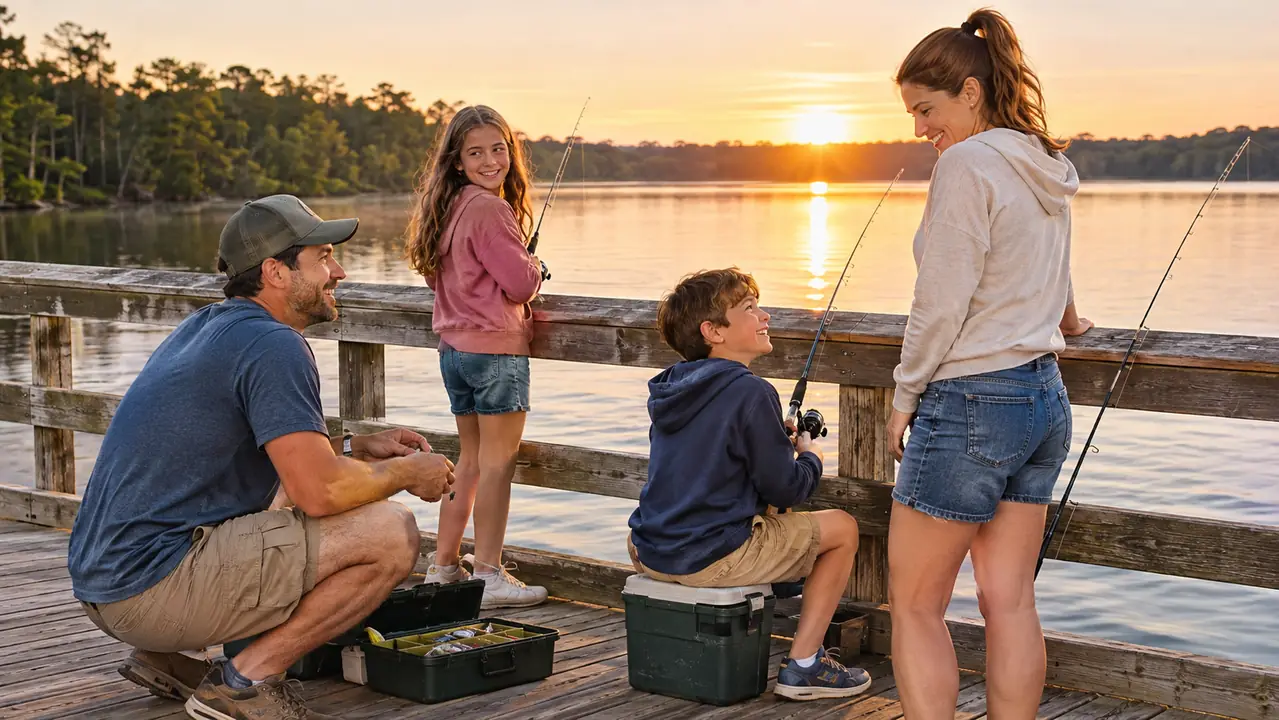
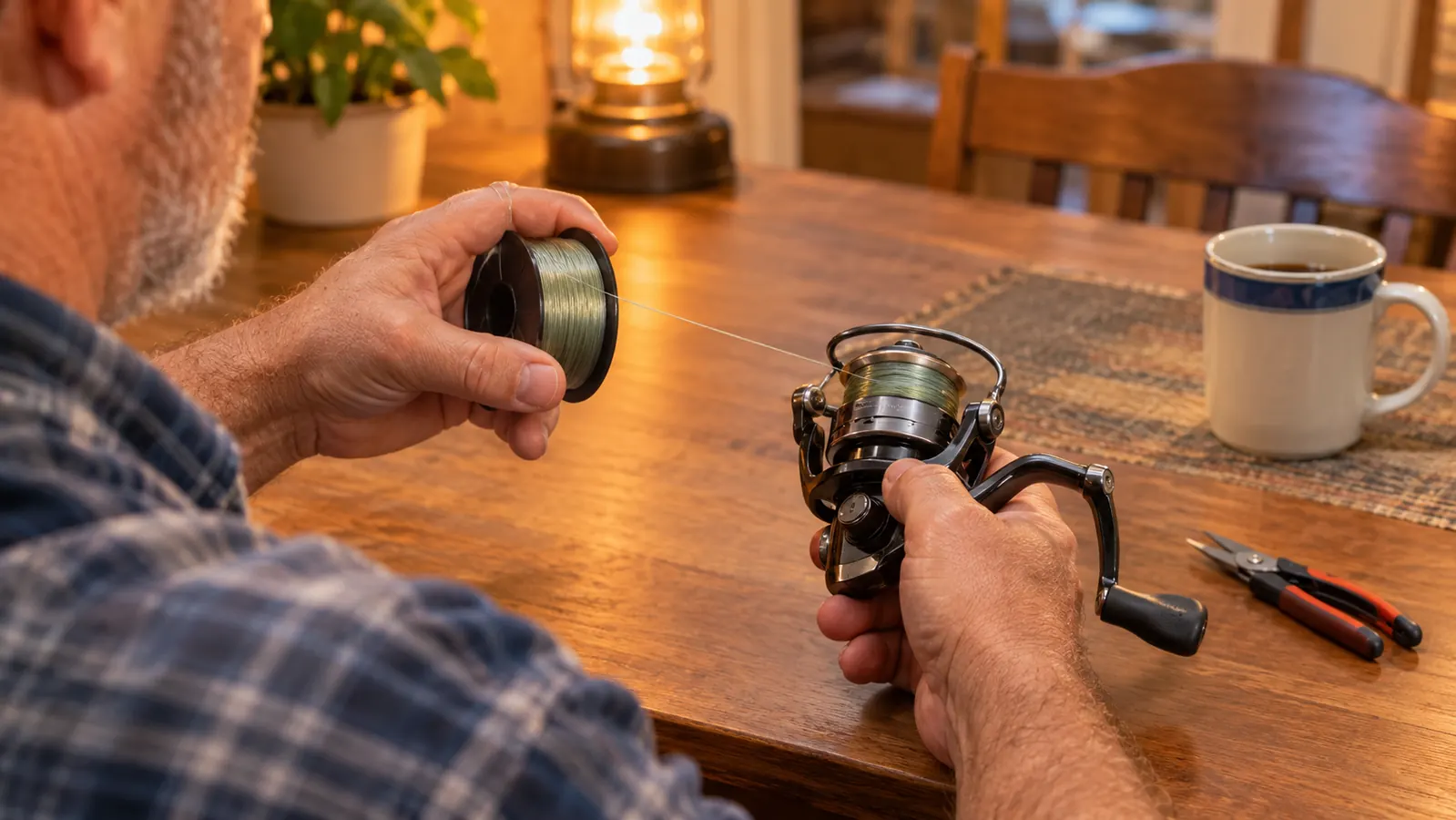
If you are standing on a bank with three kids, a bucket of worms and one rod apiece, the mono versus braid argument settles itself faster than any conversation in a tackle shop. I fish the bank and the public piers around Ross Barnett Reservoir with my three kids, and the line on their reels is Berkley Trilene XL in 6 pound test. I spooled all three of their reels with it at my kitchen table the night the box came in March. It is still on there eight months later. I trim the worn end before we leave the house, and that is the entire maintenance routine.
Here is the short answer before the long one. For bank fishing with kids, monofilament is the easier line to live with, and Berkley Trilene XL is a fair example of it. Braid is genuinely better at a short list of specific jobs, and if your fishing is mostly those jobs, braid is the right buy. I have never owned braid. Everything I say about it below comes from reading listings and from watching a regular at the pier fish it a few slots down from us, not from my own spool. I want to be plain about that, because a comparison written by somebody who has only fished one side of it is worth about what you paid for it.
| Berkley Trilene XL (6 lb) | Braided line | |
|---|---|---|
| What it is | Single strand monofilament, 6 pound test, 0.22 millimeters | Woven multi strand line |
| Coiling after a week in the truck | Mono takes a set and comes off in loops | Almost no memory, comes off straight |
| Forgiveness when a kid swings too hard | Stretch absorbs the extra force and the hook tends to hold | No stretch, so a hard swing can tear a small hook loose |
| Casting distance from the bank | Plenty for the 20 to 30 feet most bank fishing needs | Casts noticeably farther with less effort |
| Tying to a tiny jig with small hands | A simple clinch knot holds on the first or second try | Needs more wraps and careful seating or it slips |
| Rocks, pilings and shell | Nicks and scuffs, so you cut back and retie | Handles abrasion far better |
| Cutting and retying on the bank | Clippers or a thumbnail will do it | Needs sharp cutters |
| How long one spool lasts | One 330 yard spool filled three reels at about 100 yards each | One spool filled three reels, still fishing it after eight months |
| Feeling a light bite | Some give in the line softens the signal | You feel everything |
| Upfront cost to get three kids fishing | The cheaper way to fill three reels | Costs more per yard |
| Best for | Kids, bobbers, bluegill and crappie off the bank and pier | Long casts, snaggy bottom, adults who fish often |
I built that table to be honest rather than tidy, and braid wins several rows outright. I am not going to pretend otherwise. The reason I still hand a monofilament rod to a nine year old is not that braid is bad. It is that braid is less forgiving of the mistakes a nine year old makes, and forgiving mistakes is most of what bank fishing with kids actually is.
Where Berkley Trilene XL Wins
It wins the stretch row, and stretch is a feature here, not a flaw. When Ben swings at a bluegill like he is chopping wood, that give in the line absorbs the extra force, so a small hook in a small mouth tends to stay where it was put. Braid does not stretch. That is exactly what an experienced angler wants for a solid hookset at distance, and exactly what a kid does not need yet. Same line, two different jobs.
There was a Saturday in April at the pier where that stopped being theory. Ben had a bobber down and a bluegill on, and he went after it like he was chopping stove wood, the rod tip whipping past his shoulder. The hook stayed. I have replayed that swing more than once, because on a line with no give in it the hook would have torn out of a mouth not much wider than a thumbnail. He landed the fish and looked at me like he had invented the sport himself.
It wins the knot rows, which quietly decide everything else. Wyatt is thirteen and ties his own knots now, and a clinch knot in 6 pound monofilament holds for him on the first or second try. Braid needs more wraps and needs to be wetted before you snug it down, or it slips. I have watched that regular at the pier redo a braid knot twice while my kid was already casting. It is a skill and skills take reps, and reps are the thing you do not have when three kids are ready and the sun is already up.
Then there is the row I care about more than I would like to admit. One 330 yard spool of 6 pound Berkley Trilene XL filled all three of their reels, about 100 yards each, and I have not bought line since March. Three reels on one spool is the whole reason I picked it in the first place, and it is the reason I would pick it again for a family that is still figuring out whether they like this.
Where Braided Line Wins
Braid wins memory, and this is the row that actually made me think about switching the kids over. Monofilament takes a set. Leave a spool sitting on a reel in the back of the Tahoe for a week and it comes off in loops and coils, which is how you end up with the kind of bird's nest we spent a cold February morning fighting before I bought any of this. Braid has almost none of that. It comes off the spool straight and it stays straight, trip after trip, whether or not you remembered to loosen the drag.
Braid also wins distance and abrasion, both by a wide margin. It casts farther with less effort, and it holds up far better around pier pilings, shell and rock. The 6 pound line we use is light. It is right for bluegill and crappie off a pier, and it is on the thin side if a big catfish decides to turn and run under the planks. If I fished snaggy bottom or chased catfish seriously from the bank, braid would be on my own rod in a heartbeat and I would not argue with anybody about it.
One Spool, Three Reels, Eight Months of Saturdays
The 6 pound Berkley Trilene XL in the 330 yard spool is what is on all three of my kids' reels right now. Easy knots, forgiving on a hard hookset, and enough line to fill three reels. Check today's price before you spool up.
Amazon Check Today's Price on Amazon →What Eight Months on the Bank Actually Looked Like
I bought the line, along with the rest of what we now carry, the first week of March, with my own money, ordered off Amazon. That was eight months ago, not years. Before that we were fishing three cheap combos from a discount aisle, and the line that came on them is why our February trip ended after an hour with Ben in tears and every reel in a nest. When the box came I sat at the kitchen table and re-spooled all three reels that same night. First trip with the new setup was a Saturday in mid March at the pier, and Ben caught a bluegill on his first good cast.
Before I spent anything I tried to fix the old combos the cheap way, which is what most people do first. I loosened the drag on all three reels so the line would peel off with less argument. I pulled twenty feet off each spool and threw it away, thinking the top layer was the whole problem. I even stood in the yard one afternoon letting line run out across the grass and reeling it back under tension to work the coils out. It helped for a trip and then the same loops came back the next Saturday. That line was old and it was the wrong line for what we were asking of it.
That is not a story about a magic line. It is a story about a line that behaves the same way every trip, so nobody has to think about it. And the gripes are real. Mono holds some coil if the combos sit in the truck between trips, which is why the first cast of the morning is a lob and not a heave. Six pound is light for a big catfish. After a morning around the pilings you need to cut back a few feet and retie, because the line will have picked up scuffs you cannot see from the handle.
One 330 yard spool filled three reels at about 100 yards each. Eight months later, that is still what they are fishing.
The Knot Question, Because It Decides Most of This
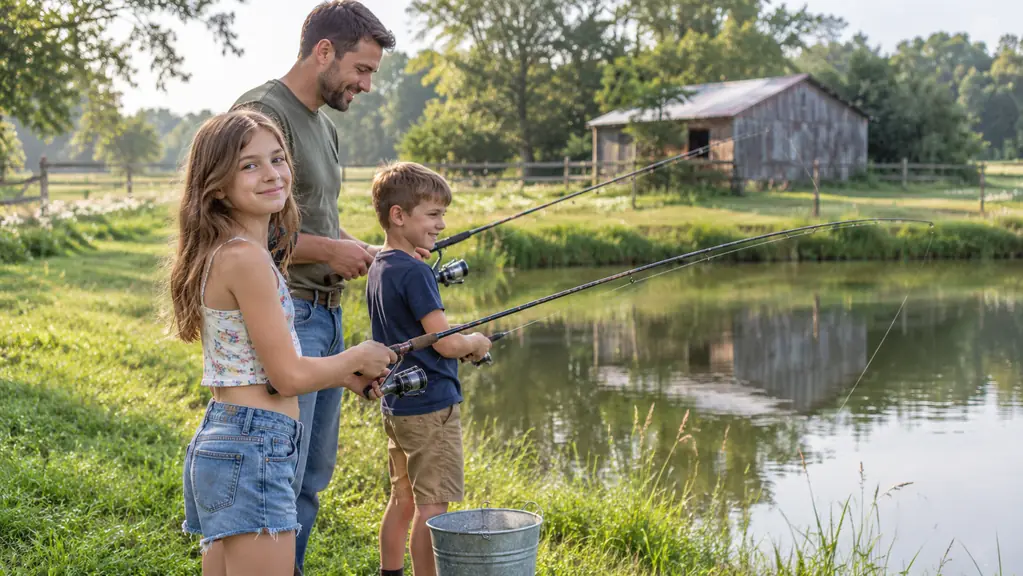
Most of what separates these two lines on a bank is not the line at all. It is the knot, and who is tying it. Callie is eleven and rigs the jigs, and her fingers are small enough that a jig head is a two hand operation. Monofilament lets her wet the knot, take five or six turns, and snug it down slowly without the whole thing sliding apart. She has that down. She would not have it down on braid without a few Saturday mornings of practice she does not want to spend.
There is a rhythm to it too. One weeknight in the fall she sat cross legged on the planks with four jig heads in her lap and rigged all four before she ever made a cast, because her fingers get cold and slow once the sun drops behind the treeline. That is the kind of thing a line either allows or does not. She finished, flicked them out one at a time, and never once asked me to help, which is about the highest compliment a line gets around here.
If you go braid anyway, tie a palomar and keep a pair of sharp cutters in the box, because fingernails and cheap clippers will not get through it cleanly. That is the trade. Braid rewards preparation and punishes shortcuts. Monofilament is the other way around, which is why it suits a family that is still losing jigs in the grass.
What I Liked
- Forgiving on a hard hookset, which matters with kids learning to set a hook
- Knots are simple enough for a nine year old to manage
- One 330 yard spool filled three reels at about 100 yards each
- Casts fine at the 20 to 30 feet most bank and pier fishing needs
- Light 0.22 millimeter diameter that bluegill and crappie do not shy away from
Where It Falls Short
- Holds some coil after sitting on a reel between trips
- 6 pound test is light for a big catfish near structure
- Picks up scuffs around pilings and needs trimming and retying
- Not the line for long casts or heavy cover
The Distance Question, Since Bank Fishing Has Limits
People bring up casting distance like it decides the argument, and on a bank it usually does not. The kids are on 5 foot rods, and a short rod limits how far anybody is throwing no matter what is on the reel. Most of our fishing happens inside 30 feet of the planks or the grass. At that range, 6 pound Berkley Trilene XL does everything asked of it, and the difference between it and braid is a number nobody in my family can use.
Where distance starts to matter is when the fish are out past what you can reach, or when you are casting across a point on a pond instead of straight out from the bank. That is a real situation and it is where braid earns its place. It also matters if you are the adult who wants to fish rather than untangle. For a grown up throwing a lure a long way, over and over, braid is simply the better tool.
There was an evening at my aunt's pond where the water went flat and I could see rings out past anything the kids could reach with a bobber, a good forty or fifty feet beyond the bank. We caught nothing out there. I am not going to pretend we did. But standing there watching those rings spread and fade, over and over, is the closest I have come to wanting a second rod with a different line on it. If that happens to you more than once a season, the answer is probably braid.
Who Should Buy Which
Buy the Berkley Trilene XL if the rod is going into a kid's hands, if there are bobbers and worms involved, if your water is bluegill, crappie and the occasional small catfish, and if you want to fill three reels without turning it into a budget meeting. Buy it if you are new enough that a bird's nest ends the trip, because a line with some stretch and a knot you can tie in the wind is worth more than a line with better numbers. Buy it if you want to spool up once in March and mostly forget about it until next spring.
Buy braid if you are the adult and you fish often, if you are casting for distance, if your bottom is rock or shell or pilings, or if the coils coming off a reel that sat in the truck are the thing that ruins your mornings. Buy braid if you are chasing catfish from the bank and 6 pound is not enough line for where you are fishing. Just go in knowing it costs more, it needs sharp cutters, and it will not forgive a hard swing from a nine year old. Check your state's rules on limits before you keep anything, same as always.
Start With the Line That Survives Three Kids
This is the 6 pound, 330 yard spool that filled all three of my kids' reels in one sitting. If your crew fishes from the bank and you are tired of untangling, start here and move to braid later if you ever need it.
Amazon See the Berkley Trilene XL on Amazon →