
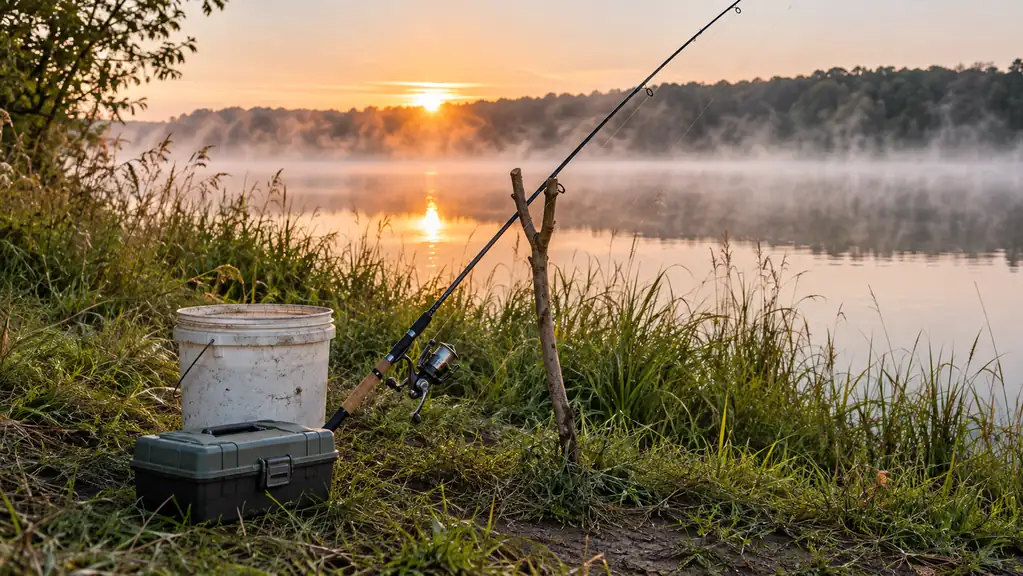
The last Saturday in February, the four of us stood on the public pier at Ross Barnett with three cheap rods from a discount aisle and a bucket of worms, and every cast came off the reel in a loose coil that piled up at the first guide. Bird's nest, bird's nest, bird's nest. Ben is nine, and by the third one he sat down on the boards and cried. I had a coffee can of nightcrawlers and a fresh pack of hooks in my jacket, and none of it mattered. We were back in the Tahoe inside an hour, and I sat in the driveway that afternoon with a bucket of untouched worms and a knot in my stomach.
What I found when I unpacked the rods decided our whole spring. Half of that tangle was the line and half of it was my own hands, and I had been blaming the rods for both. So the first week of March I ordered three Ugly Stik 5 foot Complete Spinning Kits, one for each kid, and a spool of Berkley Trilene XL in 6 pound test. The box came on a Thursday, and I set the three kits out on the kitchen table like a school project and spooled all three reels that night. The next Saturday, back on the same pier, Ben caught a bluegill on his first good cast. Nothing has broken since.
Here is the order I fixed things in, because the order is the part nobody told me in February. Two of the five steps happen at the kitchen table and three happen at the water. Skip either of the first two and the last three will not save you.
The 5 foot kit my three kids fish every Saturday
This is the combo that rides in the back of our Tahoe. A 5 foot two-piece light spinning rod with a reel rated for 240 yards of 6 pound mono, 16 ounces for the whole thing, and a reel that works in either hand. There is nothing magic in it. It just does what a bank rod has to do, and it has been dropped on a pier and left in a hot truck for eight months without a complaint.
Amazon Check Today's Price on Amazon →Step 1: Spool the line on the way it comes off the filler spool
Almost every tangle I have watched a kid get started at home, not at the pond. Monofilament has memory. Whatever twist goes into it while you are filling a reel comes back out on the first cast, and no rod made can straighten a coil once it is loose in the air.
Lay the filler spool flat on the floor and watch it while you pull a few feet off. If the line unrolls off the spool in the same direction the reel is winding it on, you are fine. If it comes off against the wind, flip the spool over and start again. That takes a minute, and it is the difference between line that lies flat on the spool and line that wants to spiral off it.
The first reel I filled in March, I laid the spool on its side and cranked without thinking about which way it was turning. The line went on with a twist I could feel with my thumb, and the first practice cast in the driveway put a coil around the tip guide. I cut it all off, flipped the spool, and filled it again. The second fill lay flat, and that is the only reel I have had to redo since.
I used Berkley Trilene XL in 6 pound test on all three reels. It is forgiving line for kids, and it is honest about its limits. It holds some coil after a week in a hot Tahoe, so I strip the worn end and retie before we leave the driveway, and 6 pound is light if a big catfish decides to take a worm. The rod is rated for 10 pound line, so if your bank has blues in it, you can fish heavier than I do and stay inside the rating.
Step 2: Fill the spool close to the lip, then stop
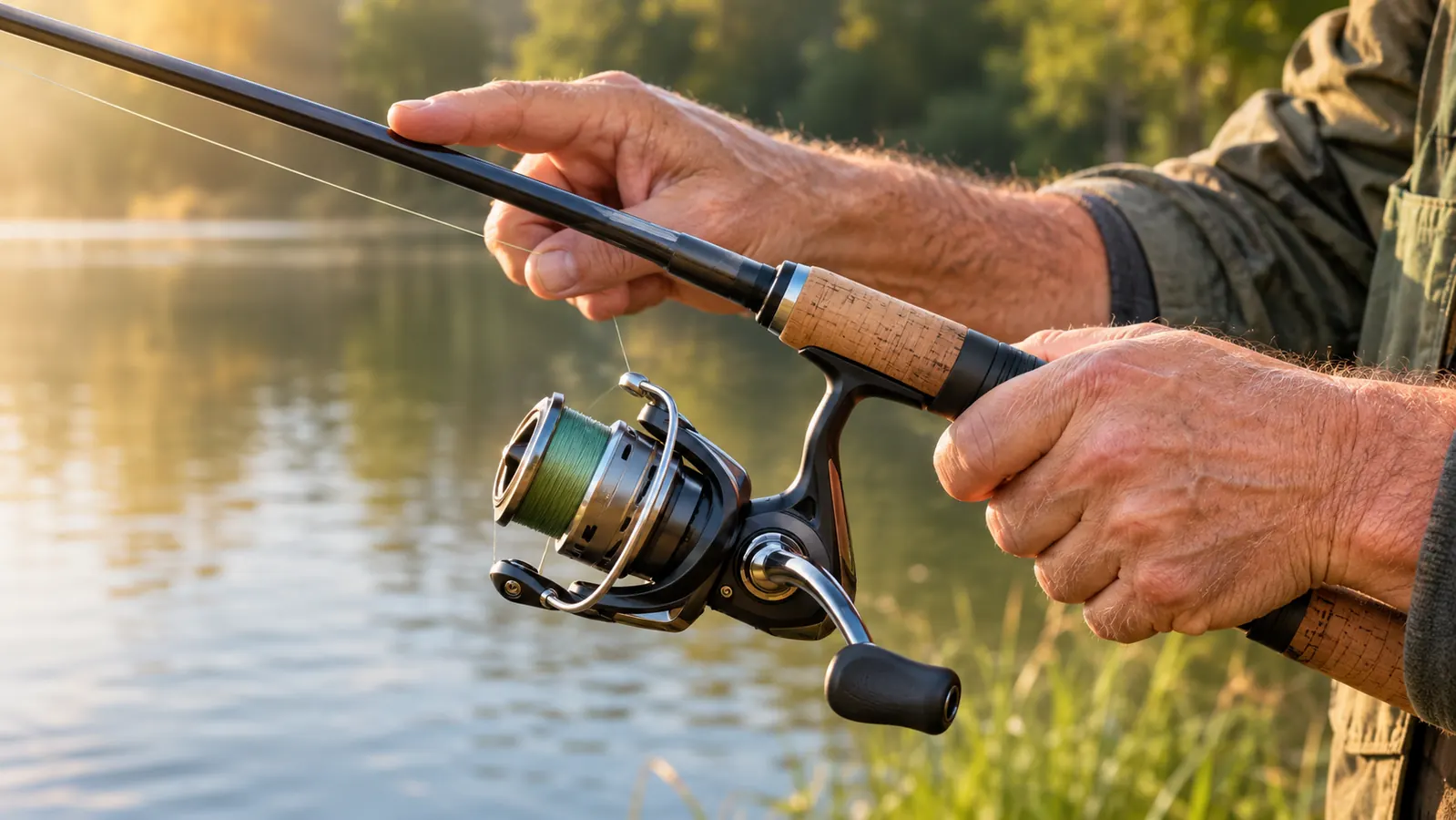
The single biggest gain in distance we got came from line level, and it is free if you fill the reels yourself. You want the line to sit about an eighth of an inch below the lip of the spool. Not a quarter inch. Not flush with the lip.
An under-filled spool makes the line climb over the lip on every cast, which costs distance and puts a loop in the line every ten or fifteen throws. An over-filled spool throws loose coils the second the bait slows down. Either one hands a kid a bird's nest on the one morning the fish are actually biting.
I check the level with my thumbnail against the lip before I tie anything on. If the line sits below my nail, it is close enough. If the line is even with the lip, I pull off about twenty feet, cut it, and tie a fresh knot, because I would rather lose twenty feet of line at the kitchen table than watch Ben pick at a nest on the pier.
The reels in the kit are rated for 240 yards of 6 pound line. Nobody casting from a Mississippi bank needs that much line on a spool. What matters is where the line sits, not how much of it you own, so fill to that eighth inch, put the leftover filler spool in the tackle box, and top up later in the season when the level drops.
Step 3: Put your hands in the right place before the line goes anywhere
Grip the handle below the reel so the reel foot sits between your middle and ring fingers and the reel hangs under the rod. Then trap the line against the rod blank with your index finger, just above the reel seat. That finger is your release. Every smooth cast depends on it letting go at one point instead of two.
Ben is nine and his hands are small, so we spent one evening in the driveway with a practice plug and no hooks on anything. Trap, open, cast, close. Twenty minutes. Callie is eleven and she had it by the end of the first afternoon, and she now coaches her brother, which he does not enjoy.
The Tuesday after the kits came, we stood in the driveway until the porch light came on. I made each kid say the steps out loud before they cast, and Ben got tangled twice before he got the finger part right. The practice plug was a bright sinker with no hook, so the mistakes cost us nothing but time.
The Ugly Stik reels are listed as ambidextrous, which matters if you have a left-handed kid in the house. Same rod, same reel, nobody gets told they are holding it backwards.
Step 4: Cast with the rod, not with your shoulder
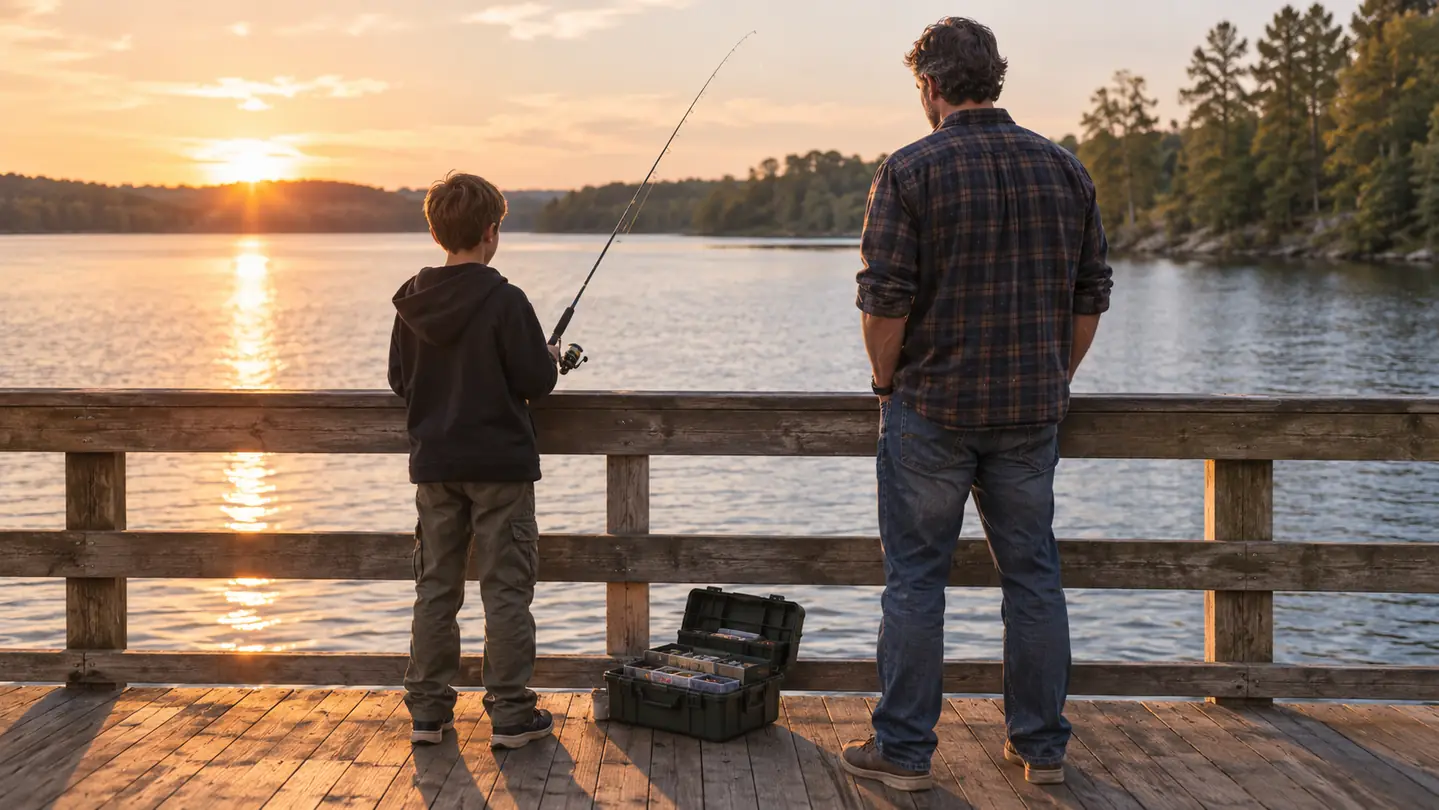
Turn your body so your off shoulder points at where you want the bait to land. Open the bail with your free hand while your index finger holds the line. Bring the rod back to about eleven o'clock, push it forward to about ten o'clock in one smooth move, and let the line go while the rod is still moving out in front of you.
The five foot rod is the reason this matters. A short rod has less leverage, so a hard heave does not buy distance. It just makes the tip dip and the line bunch up. Smooth beats strong on a short rod. Wyatt tried to muscle it for a month and got the same distance with twice the tangle.
The second Saturday in March, Wyatt and I walked the bank at my aunt's pond and paced off a cast that landed about 25 feet out, right at the edge of the grass. He tried to throw past it and got a nest. We backed up ten feet and fished the new spot instead, and that was the first time he out-fished me from the bank.
Wyatt is thirteen now and he is starting to find the five foot length short when he wants to reach the far bank of a cove. That is a fair complaint and I will not pretend otherwise. On a bank, though, most of your fish are within twenty or thirty feet of the rocks. If you need more distance than the rod gives you, walk ten feet down the bank. It works a lot better than throwing harder.
Wind is the other thing nobody warns you about. Cast low and into the wind instead of trying to throw over it, and keep the rod tip down until the bait is on the water. A high cast into a headwind comes back at you in a coil every single time, and it does not matter how good your line is.
Step 5: Close the bail by hand and look at the spool before the next cast
Close the bail with your hand, not by cranking the handle. Cranking it shut is how you get a loop around the spool that you will not notice until the next cast, and by then it is a nest. Hand first, then crank. Every time, even when a kid is excited and the fish are biting.
Before the next cast, look down at the spool for two seconds. If you see a loop standing up off the line, lift it off with your fingers and pull it out. Two seconds now saves ten minutes with a hook in somebody's hand and a kid watching you pick at it.
Callie got one of those loops on a Tuesday evening in April, on a cast she hurried because she saw a fish rise. The loop sat on the spool like a little handle. She lifted it with two fingers and pulled it out before the next cast, and it never turned into a nest. That was the first time she fixed one herself, and she has been in charge of her own reel since.
When the line starts to look like a slinky after a few trips, strip it out across the yard with nothing tied on the end and reel it back in with a little tension between your fingers. That takes the coil out of monofilament without any hardware at all. I do it the night before a trip, and I trim the last few feet off each reel at the same time.
On the Ugly rods, I also check the two-piece joint before we leave the truck. A rod that has come even a little loose at the ferrule will rattle on the cast and cost you accuracy. Push it together firmly, line up the guides, and check it after the first few casts.
What Else Helps
Line is the first thing I would change on any cheap combo, before I changed the rod. Line that sat on a shelf for three summers will coil no matter how well you spool it, and a fresh filler spool of 6 pound monofilament is cheap. It fixed more of our tangles than any single tip on this page, and it is the one thing I would hand a parent who is starting from zero.
For catfish, a rod holder earns its place on soft bank. We use a two-pack of ground rod holders at my aunt's farm pond and on the dirt bank at the reservoir, and they keep the rods out of the mud while we eat lunch. They are no good on the wooden piers, so on pier days they stay in the Tahoe. The stake is a chore in the rocky clay at the reservoir, and two rods is the whole limit, but it beats laying a rod in the grass and stepping on it.
Keep the small stuff together, too. Loose hooks rolling around the back of the truck are their own kind of trouble, and I found three of them on the floorboard the day of that February trip. A hard box with three trays, sorted by job instead of by kid, ended more of our bad mornings than I expected. Wyatt carries it, and that is his job.
Give everybody a job and the trip lasts twice as long. Callie rigs the jigs, Ben runs a bobber and a worm, Wyatt ties the knots. When all three of them have something to do with their hands, nobody is bored and nobody is casting behind my head. Check your state's rules on licenses and limits before you go, and take the kid who has never been.
The fix was a fresh spool of 6 pound line, an eighth of an inch of spool lip showing, and a smoother cast. Ben has not cried on the pier since February.
Spool it right before the first trip and the rest is easy
Three kids fish these Ugly Stik rods from the bank and the public piers at Ross Barnett, one Saturday at a time. If you are buying one, buy it for a kid who is going to drop it, fill the spool yourself the night before, and leave the rest alone. That is the whole program, and it has held up for eight months of Saturdays.
Amazon Check Today's Price on Amazon →