
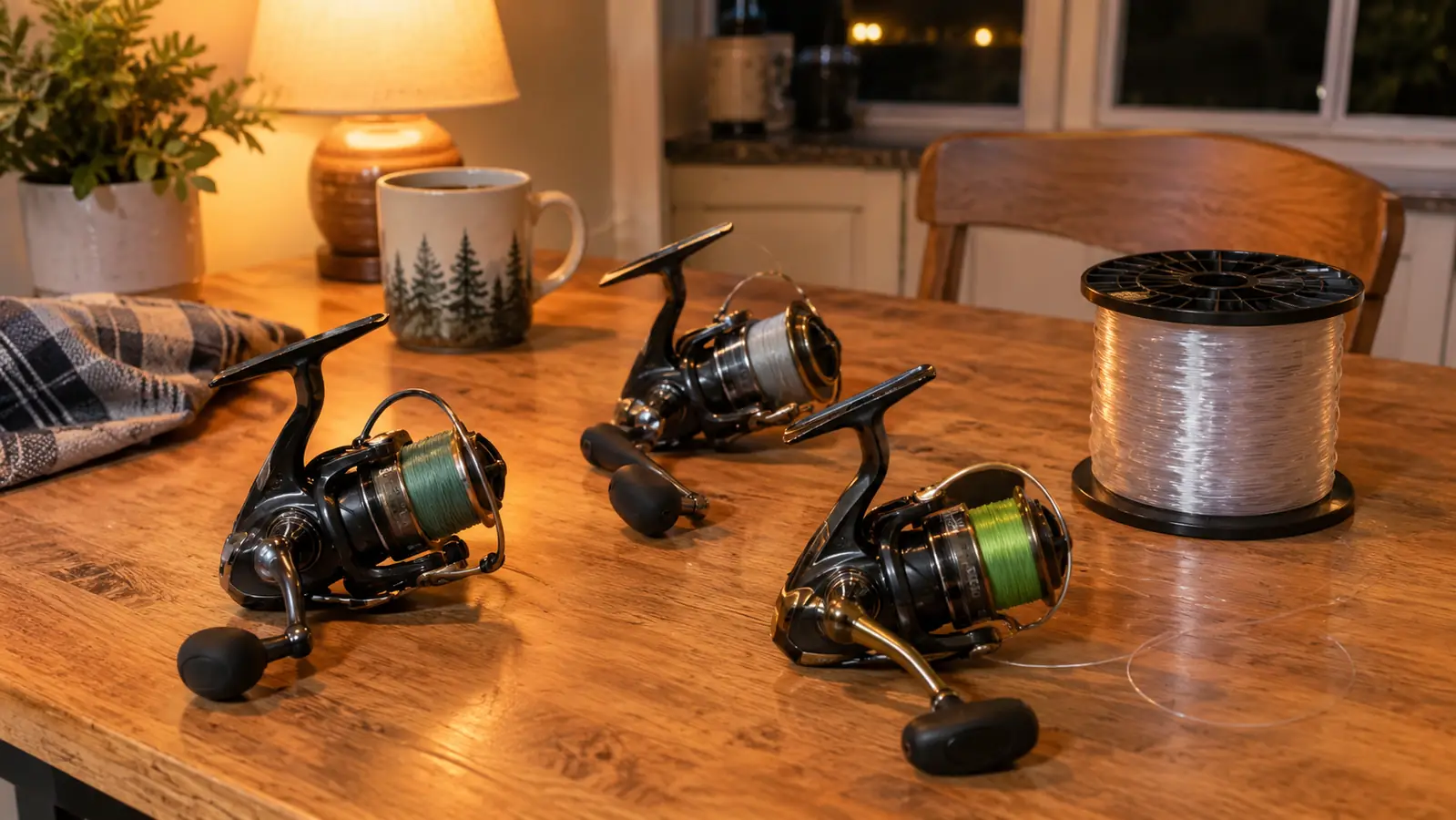
I bought the Berkley Trilene XL in 6 pound test because of one bad Saturday in late February. Cold wind coming across the water, three cheap combos, and every reel throwing loops I could not pick out with cold fingers. Ben is nine. He got a bird's nest so bad he could not even get his thumb into it, and he sat down on the pier and cried, and we were loaded up and headed home inside of an hour. I am not telling you that to make anybody feel bad. I am telling you because it is the reason I spent an evening at the kitchen table with a spool of line instead of doing laundry.
That afternoon I unloaded the back of the Tahoe and found loose hooks rolling around on the mat, which is a separate problem but the same problem. Cheap gear was costing us trips. So the first week of March I ordered a spool of Berkley Trilene XL, sat down at the table that night, and re-spooled all three kids' reels myself. I paid for it out of my own money and nobody sent me one to try. We are eight months in now, and I have a fair amount to say about it, and not all of it is praise.
The Quick Verdict
The best line I have put on a kid's reel, and also the reason I keep scissors and a spare spool in the Tahoe. It is a good monofilament, not a fix for everything.
Amazon Check Today's Price →The spool that ended the bird's nests on our three reels
Six pound test, 330 yards, enough to fill three kid-sized spinning reels with line left over. This is the exact spool I re-spooled with the first week of March.
Amazon Check Today's Price on Amazon →How I've Used It
The Berkley spool holds 330 yards, which is 301 meters. Three reels at about a hundred yards each, and I still had line left over. I ran a pencil through the spool and held it between my knees, which is the free version of a line spooler and works about as well as that sounds. Wyatt is thirteen and fishes the most, so his reel got filled first and got the freshest line.
What I tried first, before I ordered anything, was the free fix. I pulled about forty feet of the old line off each reel and soaked the spools in a bucket of warm water on the back porch for an afternoon, because a man at the pier told me that would take the coil out. It did, for about one trip. By the second Saturday the line was curly again and Ben was back to picking loops out with his thumbnail. I tried stretching it too, which is holding the line between both hands and pulling until it warms up. Same result.
Those tricks work on line that is basically sound and just needs a reset. They do not work on line that has been sitting in a discount aisle for two years and has decided it would rather be a spring than a fishing line. That is the difference I could not get anybody to explain to me before I bought this spool. New line on a clean reel is a different animal from old line on the same reel, and no amount of soaking closes that gap.
Our first trip with it was a Saturday in mid March at the pier. Ben caught a bluegill on his first good cast. That is not a fish story, it is just what happened, and it set the tone for the whole spring. Nothing on those three reels has broken since. Nothing has been replaced. I have not re-spooled any of them.
What I do instead is strip off the first ten or fifteen feet before we leave the house, because that is the part that takes the wear. Sun, dock concrete, the abrasion from dragging a bobber across a shell bank. The line underneath is still good. That is a real thing about monofilament that does not get said enough: the top of the spool is what fails, not the whole thing, and trimming it buys you months.
We fish the bank and the public piers around Ross Barnett, plus my aunt's farm pond. Bluegill and crappie mostly, some catfish, the occasional largemouth. No boat, no waders. This line has been wet, dried, left in a hot Tahoe, rained on, and wound back onto a reel wrong by a nine year old. It has held up better than I expected for what it is.
What 6 Pound Mono Actually Does Well
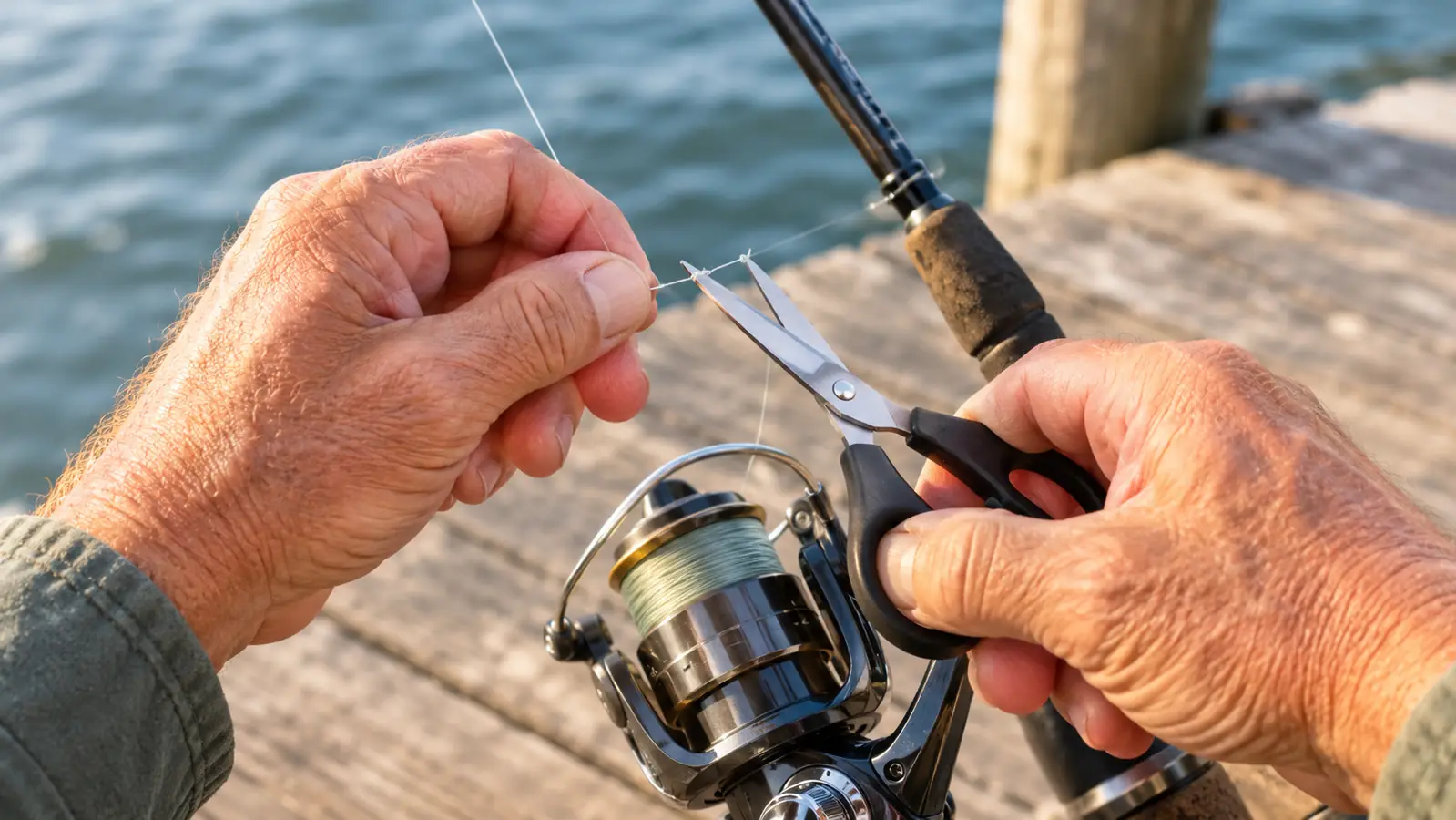
The first thing it did was stop the bird's nests. Not because I got better at spooling, but because the line goes onto the reel the way it is supposed to and comes off the same way. The old line was stiff and curly from sitting on a shelf in a discount aisle, and it wanted to leave the spool in loops. This came off the bulk spool flat and went on flat.
It casts light baits. Ben throws a bobber and a worm, which weighs almost nothing, and heavy line will not do that. Six pound test at 0.009 inch, or 0.22 millimeters, is thin enough that a small kid can load the rod and put the bait out there without a running start. That single fact changed our Saturdays more than any other piece of gear I bought this year.
The clearest test I have is a Saturday in late April, the one where Callie decided she was going to cast to the far edge of the shade line under the pier. She is eleven and she does not have a long cast in her, but she put a small jig out there past where Ben's bobber was sitting. Nothing dramatic happened. She caught two bluegill and lost a third at the rail. But she made that cast maybe thirty times in an afternoon and did not backlash once, and I do not think she could have done that with the line that came on that reel.
The other thing I noticed, and this surprised me, is how much less time I spend fixing other people's gear. When the line behaves, the reel behaves, the cast goes where it was aimed, and nobody needs me. I got to fish maybe twice as much this spring as I did last spring, not because anything got easier but because I stopped being the tackle repair station. That is worth more to me than any spec on the label.
It knots easily, which matters because Wyatt ties the knots and he is thirteen. A clinch knot with a little spit pulls down snug and sits where he put it. We have not had a knot fail that I can point to. Line that is hard to knot is line that gets knotted badly, and badly knotted line is how you lose the fish and the bobber and the hook in one cast.
And it forgives. This is the part that matters with children. When Callie sets the hook on a bluegill like she is trying to start a lawn mower, the line gives and the fish stays on. Monofilament stretches. That stretch is why she lands fish she has no business landing, and it is also why she does not snap off on every other cast. Braid would not give her that.
Where It Falls Short
Six pound test is light for a big catfish. I want to say that plainly because I have seen this line recommended for everything. If you are on the bank with a chunk of bait and hoping for a ten pound channel cat, this is the wrong line and it is not close. I rig the catfish rods heavier. The Berkley stays on the kid reels where it belongs.
I found the limit of it in June, on a weekday evening at the pier when a catfish took a bait meant for a bluegill. It did not break the line, exactly. It straightened the hook and kept going, which is the more honest version of the same outcome. Six pound test is six pound test. It has a breaking strength of six pounds and a fish that weighs more than that, pulling against a drag that is set even a little tight, will find the edge. There is no version of this where I get to pretend the line did something it cannot do.
So I keep a heavier spool for the catfish rods and I do not apologize for it. If you want one line for the bluegill rod and the catfish rod, you are asking for a compromise, and the compromise will cost you one of the two jobs. I would rather carry two spools and have both jobs done right.
It holds coil. Every monofilament does, and this one is no different. If a reel sits in the Tahoe for two weeks in August, the first thirty feet will come off in loose spirals and you will spend a few casts straightening them out. Trimming the worn end helps. Warming the line in your hands helps. Neither one fixes it, and I am not going to pretend otherwise.
It has memory and it has stretch, and both work against you when you want to feel a light bite or set a hook at distance. That is a fair trade for a kid and a poor trade for an adult fishing finesse. I would not argue with anybody who wanted something else on their own rod. Different jobs, different line.
The last one is smaller but real. The spool is 330 yards, which sounds like a lifetime supply and is not. Sun and heat and abrasion eat monofilament, and if you fish most weekends you will be buying another spool next spring. I have maybe a third of it left after doing the three reels, and it has been sitting in the garage since March.
The line did not make my kids better anglers. It stopped costing us trips, which is the thing I actually needed.
The Things Nobody Warns You About
Nobody tells you that the line is only half of the fight. I put the same line on the same three reels and still got tangles until I figured out that the reel mattered more than I wanted to admit. The cheap combos had a drag that would not back off smooth and a bail that snapped shut mid cast. If your reel is doing that, no line on earth will save the trip. You will just tangle better line.
The spool itself is worth a word. Two point oh eight ounces, small enough to hold in one hand, and there is nothing clever about it, because it is a spool of line. Unspooling it wrong is the easiest mistake in fishing and it does not come with instructions. I ran a pencil through the hole, held it between my knees, and turned the reel handle slow while I watched the line go on. If it wants to twist coming off the spool, turn the spool over and start again. That is the whole trick, and it took me two reels to learn it.
The other thing is that a clean spool matters more than the name on the label. If the line goes on with twist, it comes off with twist, and it will loop on the third cast no matter what it cost. I learned to lay the spool flat on the table, watch which way the line comes off, and flip it if it wants to coil against the reel. That one habit did more for us than any upgrade.
And nobody tells you that kids notice the difference even when they cannot name it. Ben could not tell you what monofilament means, but he could tell you his reel stopped making that noise. Callie could not tell you what line diameter has to do with anything, but she could tell you her cast goes further now. They do not need the explanation. They need the trip not to end early.
And it is not a cure for bad habits. Wyatt still gets the occasional loop because he reels slack onto the spool. Ben still lays his rod down in the grass and then drags it back out. The line just means those mistakes cost a minute instead of a trip. I will take that trade every single time.
What I Liked
- Six pound test at 0.009 inch casts light bobber rigs a small kid can actually manage
- 330 yards fills three kid-sized reels with line left over
- Survived a hot Tahoe, rain, and being wound on wrong since March
- Cheap enough that trimming off worn line before every trip is not painful
- The stretch forgives a hard hook set from an excited eleven year old
Where It Falls Short
- Six pound test is too light for serious catfish
- Holds coil if a reel sits in a hot vehicle for a couple of weeks
- Memory and stretch work against you on light bites at distance
- Not the line for shell banks, rocks, or heavy cover
- You will be buying another spool within a year
Who This Is For
Parents putting line on a kid's reel. That is the honest answer and I am not going to dress it up. If you have a nine year old with a five foot spinning combo and a bobber, this is the line. If you are an adult fishing crappie off a public pier with light jigs, it fits that too, because it casts the small stuff and it does not cost much to replace when it wears out. If you want one spool to cover everything in the garage, it will cover more of it than you expect and less than you hope.
It also suits anybody who re-spools once a season and does not want to think about line again until next spring. That is most of the people I know who fish from the bank. The ones who fish every week and count casts are a different story, and I will get to them.
Who Should Skip It
If you are chasing catfish on the bank, skip six pound. Step up or go to braid, and do not let anybody talk you into lighter line for a fish that lives in cover. If you fish shell banks or rocks where line rubs, skip it or check the last few feet constantly, because monofilament does not handle abrasion the way braid does. And if you are the kind of angler who wants to feel a crappie breathe on a jig, six pound mono will mute some of that. That is not a knock on the line. It is a description of what monofilament is.
The last group is anybody who wants one purchase to solve a gear problem. It will not. It solved our line problem. The reel that snapped shut on the cast is still the reel that snaps shut on the cast, and the kid who lays his rod in the grass still lays his rod in the grass.
Eight months, three kids' reels, one spool, no re-spooling
If you are re-spooling a child's reel this weekend, this is what I put on ours in March and it is what I will buy again in the spring. Six pound test, 330 yards, one spool does all three reels.
Amazon Check Today's Price on Amazon →